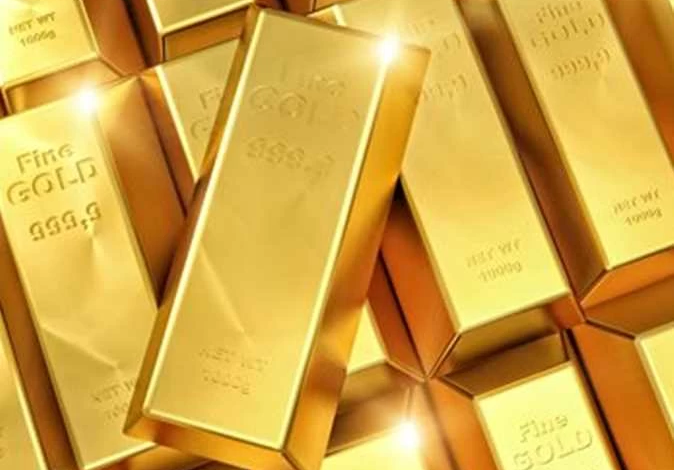

Gold prices rise sharply amid global anticipation
Gold prices saw a notable rebound in global markets today, rising to their highest level in nearly two weeks. This surge was supported by a slight decline in the value of the US dollar, following recent statements by US President Donald Trump, in which he suggested that the war with Iran could end within two to three weeks. This cautious optimism was reflected in investor behavior, as they reassessed their financial positions and sought safe-haven assets.
In trading, spot gold rose 0.4% to $4,685.79 an ounce by 2:28 GMT. This relative stability came after the precious metal reached its highest level since March 20 at $4,723.21 earlier in the day. Meanwhile, U.S. gold futures for April delivery climbed 0.8% to settle at $4,713.40 an ounce.
Historical background: The March recession and the 2008 crisis
To understand the current context of gold prices, one must consider the recent sharp market movements. The precious metal plummeted by more than 11% during March, marking its largest monthly decline since October 2008, during the global financial crisis. Historically, in times of severe crises and liquidity shortages, investors are forced to liquidate their assets, including gold, to cover losses in the stock market, which explains this initial sharp drop.
This decline was exacerbated by growing expectations of tighter monetary policy, coupled with the emergence of the US dollar as a preferred safe haven for investors since the outbreak of the war with Iran on February 28. These factors combined have exerted immense pressure on precious metal prices in recent weeks.
US monetary policy and interest rates
It is a well-established economic fact that there is an inverse relationship between interest rates and the attractiveness of gold. Unlike bonds, gold does not offer a fixed return, and therefore, rising interest rates increase the opportunity cost of holding gold. Given the current circumstances, financial market participants have almost entirely ruled out any possibility of the Federal Reserve cutting US interest rates this year. This dramatic shift in expectations comes after markets had priced in two rate cuts before the outbreak of the war, reflecting the extent to which geopolitical shocks influence the course of global monetary policy.
Expected impact at the local, regional, and international levels
This volatility in gold prices has far-reaching consequences. Locally, higher gold prices in the local currency lead to a slowdown in retail jewelry sales, as consumers' purchasing power is directly affected. Regionally, geopolitical tensions in the Middle East are prompting regional investment funds to increase their gold holdings as a hedge against risk and currency fluctuations.
Internationally, central banks around the world are closely monitoring these developments. Gold remains a key component of countries' foreign reserves, and any dramatic changes in its price or the value of the dollar prompt these banks to rebalance their investment portfolios to ensure financial stability. Continued uncertainty will keep gold in the spotlight as one of the most important indicators of both fear and reassurance in the global economy.