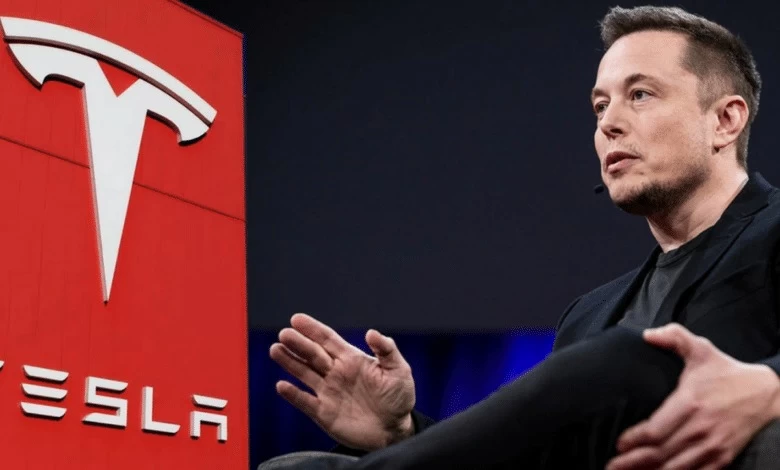

Tesla, the leading electric car manufacturer, announced a voluntary recall of 218,868 vehicles in the United States due to a software glitch that could affect the performance of the rearview camera, increasing the risk of accidents while reversing. This recall affects a wide range of the company's popular models, including the Model S, Model 3, Model X, and Model Y.
According to a report by the National Highway Traffic Safety Administration (NHTSA) in the United States, the flaw lies in the potential delay or complete absence of the live video feed from the rearview camera when reversing mode is activated. This delay, even if only for a few seconds, significantly reduces the driver's field of vision, which contradicts federal safety standards designed to protect pedestrians and young children behind vehicles and prevent collisions during maneuvers.
General context: Software recalls in the era of smart cars
This isn't Tesla's first recall, a company that has built its reputation as much as a car manufacturer. Over the years, Tesla has faced a series of recalls, most of which were efficiently resolved through over-the-air (OTA) software updates. This feature is a key advantage Tesla has over traditional automakers, as it allows for fixing problems without requiring car owners to visit service centers, saving time and effort. However, this heavy reliance on software makes Tesla vulnerable to bugs that could affect critical safety functions, such as the Autopilot system or, as in this case, essential driver assistance systems.
The importance of the event and its expected impact
Domestically, within the United States, this recall underscores the crucial role of regulatory bodies like the NHTSA in ensuring that all companies, including tech giants, adhere to the highest safety standards. Internationally, this move puts Tesla's reputation under renewed scrutiny, particularly in competitive markets like Europe and China, where consumers and regulators closely monitor the quality and reliability of its vehicles. It also highlights a broader challenge facing the entire automotive industry as it transitions to software-defined vehicles, where the safety of the software code is becoming as critical as the safety of the mechanical components. Tesla is expected to release a software update to address the issue immediately and free of charge for all affected vehicles, and owners can check their vehicle's status using the vehicle identification number (VIN) on the company's official website or the NHTSA website.