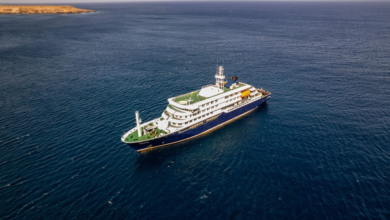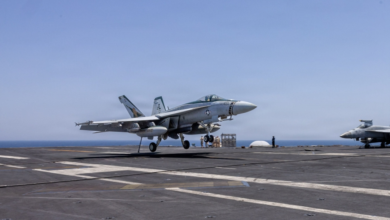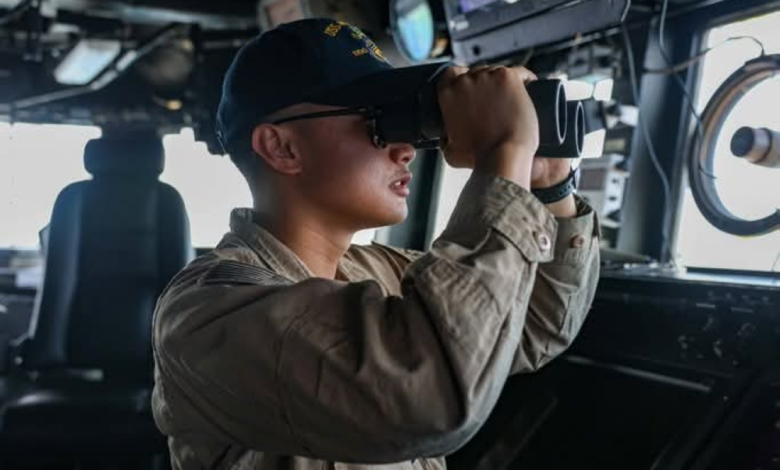

The US Central Command (CENTCOM) announced that US Navy guided-missile destroyers had transited the Strait of Hormuz and begun operations in the Arabian Gulf. This move is part of ongoing efforts to enhance maritime security and ensure freedom of navigation in one of the world's most important waterways. Meanwhile, Iranian state television reported that Iranian naval forces fired "warning" missiles near US warships, further escalating tensions in an already volatile region.
General context and strategic importance of the Strait of Hormuz
The Strait of Hormuz is a vital artery for the global economy, with nearly one-fifth of the world's daily oil consumption passing through it, in addition to vast quantities of liquefied natural gas. Separating Iran and Oman, the strait connects the Persian Gulf to the Gulf of Oman and the Arabian Sea, giving it immense geopolitical importance. Historically, the region has been the scene of numerous confrontations and tensions, most notably during the "Tanker War" of the 1980s. In recent years, tensions have flared up intermittently, particularly after the United States withdrew from the Iran nuclear deal in 2018 and reimposed sanctions on Tehran, leading to incidents of tanker seizures and attacks in the strait.
Expected impacts at the regional and international levels
The passage of US destroyers and Iran's announcement of launching warning missiles carry significant implications. Regionally, this escalation heightens the concerns of the Gulf Arab states, which rely heavily on the stability of navigation through the Strait of Hormuz for their oil exports. It also places US and Iranian forces in direct contact, increasing the risk of miscalculation that could lead to an unintended military confrontation.
Internationally, the world is watching these developments with great concern, as any disruption to shipping through the Strait of Hormuz could lead to an immediate and sharp rise in global oil prices, negatively impacting the economies of energy-importing countries and increasing uncertainty in financial markets. These US actions are part of the international maritime security initiative known as Operation Sentinel, which aims to deter attacks and ensure the safety of commercial vessels—an operation Tehran considers provocative and a threat to its national security.