Medical achievement: A heart attack patient was saved at King Fahd Medical City

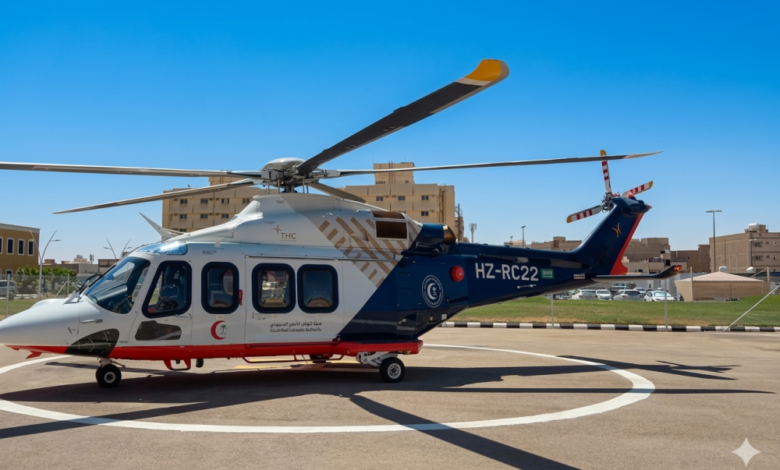
The Second Riyadh Health Cluster, represented by King Fahd Medical City, has achieved a new milestone in the Kingdom of Saudi Arabia's healthcare record. Medical teams, in strategic collaboration with the Saudi Red Crescent Authority's air ambulance service, successfully saved the life of a patient suffering a severe heart attack in a complex nighttime operation utilizing the helipad designated for critical cases.
Details of rapid response and air rescue
In this remarkable medical event, emergency teams received a call late at night. The Saudi Red Crescent teams immediately responded, and initial assessments and examinations revealed that the patient was suffering from symptoms of an acute myocardial infarction requiring urgent surgical intervention. Due to the distance between the patient's location and the advanced specialized centers at Harimla General Hospital, the rapid air transport protocol was activated. Real-time and seamless coordination took place between ground and air ambulance services to transfer the patient directly to King Fahd Medical City in Riyadh. What distinguished this operation was the bypassing of the traditional emergency department; the patient was immediately transferred to the pre-prepared cardiac catheterization lab upon arrival, enabling the opening of the blocked artery and saving the patient's life in a record time of less than two hours.
The path of heart attacks and the importance of the golden hour
This remarkable success is the culmination of efforts to activate the "Heart Attack Pathway," a vital component of the modern Saudi healthcare model launched in 2022. This pathway is medically and globally based on the concept of the "Golden Hour," the critical period following a heart attack. Cardiologists worldwide emphasize that rapid intervention within this 60-minute window drastically reduces damage to the heart muscle and increases the chances of survival. This pathway has proven its effectiveness in the Kingdom, with official statistics indicating its contribution to reducing heart attack deaths by up to 50%, decreasing heart failure cases by 75%, and lowering hospital readmission rates.
Health transformation and the Kingdom's Vision 2030
Historically, managing complex emergencies requiring intercity and inter-provincial transfers has presented significant logistical challenges. However, with the launch of the Health Sector Transformation Program, a key component of Saudi Vision 2030, the healthcare system has undergone a comprehensive restructuring, culminating in the establishment of "health clusters." This transformation aims to facilitate access to healthcare services, improve their quality, and enhance preventative measures against health risks. The direct coordination between paramedics in the field and consultant physicians in hospitals reflects the advanced technological and operational capabilities the Kingdom has achieved to ensure rapid response times.
Regional and local impact of advanced care
At the local and regional levels, King Fahd Medical City stands out as one of the largest and most advanced medical complexes in the Middle East. The helipad's 24/7 operational readiness, even during evening hours, underscores the facility's high capacity and operational efficiency. This integration between the Saudi Red Crescent Authority and referral hospitals not only saves lives but also enhances the Kingdom's position as a leading destination for advanced healthcare, ensuring a robust health safety net for all citizens and residents, thus improving overall quality of life indicators.