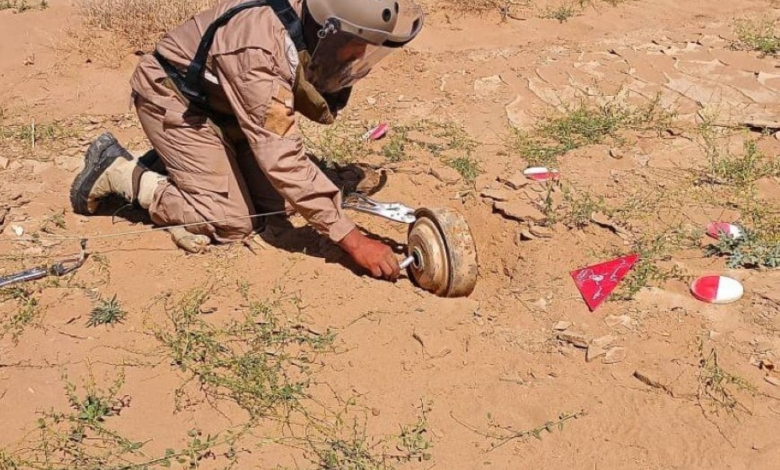

The “Masam” team in Aden Governorate removed two unexploded ordnance in Khor Maksar District, and (168) unexploded ordnance in Aden District, and in Qa’tabah District in Al-Dhali’ Governorate, one anti-personnel mine was removed.
Project to clear Yemeni lands of mines
In Hays District, Al Hudaydah Governorate, the team removed one anti-tank mine and one piece of unexploded ordnance. In Al Mukalla District, Hadramawt Governorate, they removed 12 anti-tank mines and 294 pieces of unexploded ordnance.
In Midi District, Hajjah Governorate, they removed two anti-personnel mines, 34 anti-tank mines, and 40 pieces of unexploded ordnance. In Al Mudharabah District, Lahj Governorate, they removed one anti-tank mine and one piece of unexploded ordnance.
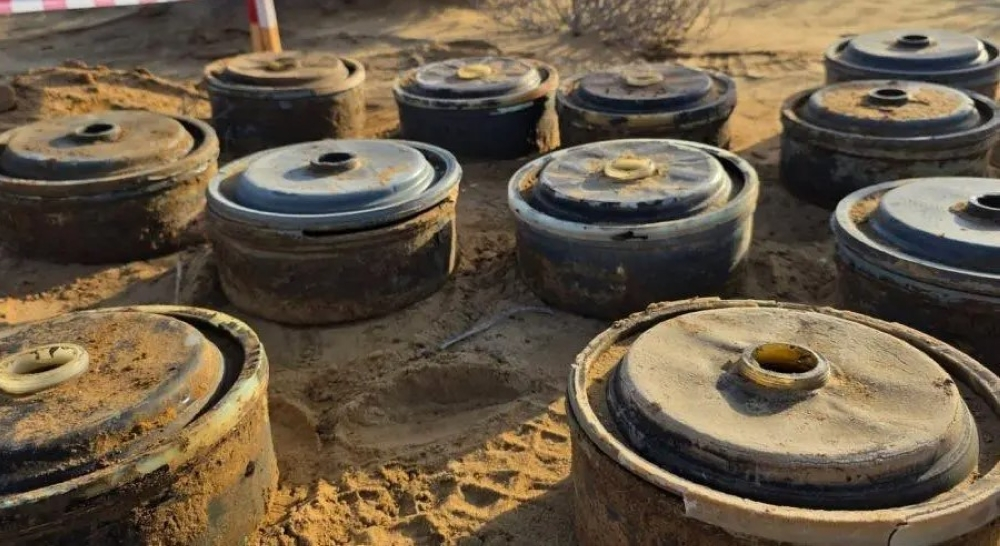
In Marib Governorate, the team removed one anti-personnel mine and one piece of unexploded ordnance in Al-Wadi District, and 650 pieces of unexploded ordnance in Harib District.
In Shabwa Governorate, the team removed three anti-personnel mines and one piece of unexploded ordnance in Ain District, and one piece of unexploded ordnance in Usaylan District.
Landmines removed in Yemen
In Taiz Governorate, the team removed three unexploded ordnance in Al-Mukha District, one anti-personnel mine, one anti-tank mine, and eight pieces of unexploded ordnance in Dhubab District, and one anti-personnel mine and three pieces of unexploded ordnance in Saluh District.
This brings the total number of mines removed since the start of the MASAM project to 552,420. These mines were planted indiscriminately across Yemen, claiming the lives of innocent children, women, and the elderly, and sowing fear in the hearts of civilians.
The Kingdom of Saudi Arabia, through its humanitarian arm, the King Salman Humanitarian Aid and Relief Center, continues its efforts to clear Yemeni lands of mines as part of a project that enhances civilian safety and contributes to enabling Yemenis to live dignified and secure lives.