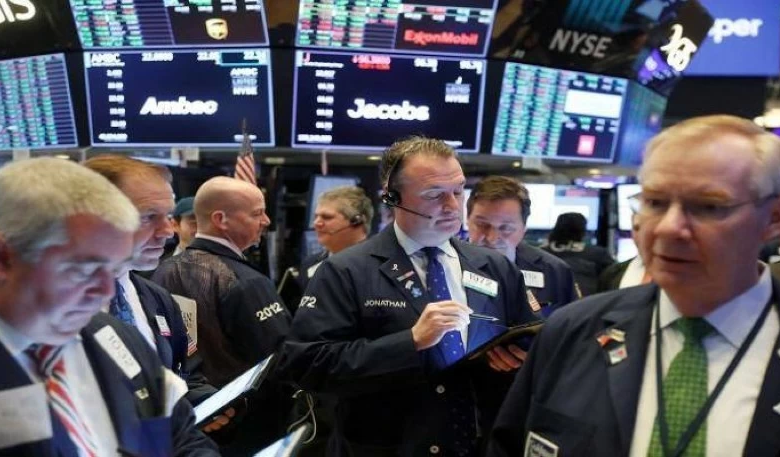

US financial markets experienced a volatile trading session, with major indices extending their losses significantly, impacted by a combination of geopolitical and economic factors that unsettled investors. This decline comes amid continued rising oil prices and bond yields, fueled by renewed tensions in the Middle East, particularly in the Strait of Hormuz, which has dispelled the cautious optimism that prevailed in the markets in recent weeks.
Performance of major Wall Street indices
At the close of trading, the Dow Jones Industrial Average fell sharply by 486 points, or 1%, to settle at 49,013. The S&P 500 followed suit, declining 0.5% or 36 points to 7,194. Meanwhile, the tech-heavy Nasdaq Composite dropped 0.45%, or 109 points, to close at 25,004.
General context: Geopolitical tensions and their impact on markets
Historically, global financial markets, particularly the energy market, have been highly sensitive to any instability in the Middle East due to its strategic importance to global oil supplies. The Strait of Hormuz is one of the world's most vital waterways, with approximately one-fifth of the world's daily oil consumption passing through it. Therefore, any threat of closure or disruption to shipping traffic leads to an immediate spike in crude oil prices due to fears of supply shortages.
These concerns were exacerbated by conflicting reports about the situation in the Strait. While Washington affirmed its commitment to ensuring the safe passage of commercial vessels, statements from Iran denied this, increasing uncertainty and prompting investors to shy away from high-risk assets like stocks and seek safe havens.
Economic impact: oil, inflation, and interest rate decisions
Rising oil prices not only affect companies' transportation and production costs, but also fuel fears of accelerating inflation. This puts central banks, particularly the US Federal Reserve, in a difficult position. To curb inflation, they may be forced to keep interest rates high for longer—a tight monetary policy that restricts economic growth and makes borrowing more expensive for businesses and consumers, negatively impacting corporate profits and stock valuations.
This growing investor anxiety overshadowed the positive sentiment generated by strong corporate earnings reports last week, reaffirming that geopolitical factors remain a powerful force capable of rapidly and unexpectedly altering market trajectories. Traders are now closely monitoring developments in the region, aware that continued tensions could lead to further volatility in global markets in the coming period.