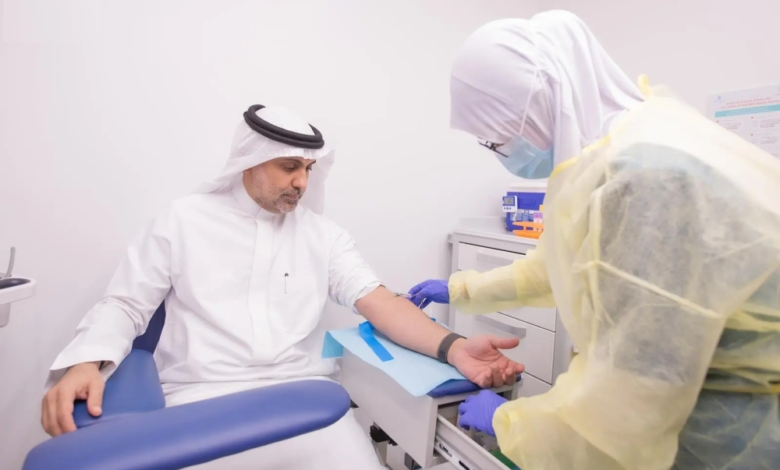
The Minister of Health launches the "Check Your Health" campaign: 10 preventative tests during Ramadan

In a strategic move aimed at promoting public health and reinforcing the concept of prevention over treatment, the Minister of Health and Chairman of the Board of Directors of the Health Holding Company, Mr. Fahd bin Abdulrahman Al-Jalajel, launched the national awareness campaign “Check Your Health” on Monday. This campaign covers all regions and cities of the Kingdom of Saudi Arabia, implemented and supervised by the Health Holding Company and its affiliated health clusters, representing a qualitative leap in the way primary healthcare is delivered.
A comprehensive package of preventive examinations
The “Check Your Health” campaign features a comprehensive package of 10 essential and vital preventative tests. These tests aim to enable early diagnosis and proactive treatment of chronic and serious diseases before they worsen. The tests include blood pressure measurement, obesity indicators, and screenings for colon and breast cancer, as well as other vital signs that reflect an individual's overall health.
Innovative model: Check while you're in your car
The campaign was launched during a visit by the Minister to the “Make Sure for Your Health” center in Riyadh, which represents an innovative model for providing healthcare services. The center allows beneficiaries to undergo periodic checkups via dedicated drive-through lanes, facilitating access to the service quickly, accurately, and with the highest quality standards. Al-Jalajel reviewed the operational procedures of the drive-through lanes, emphasizing that this model reflects the technological and logistical advancements in the healthcare system and aims to overcome the psychological and time barriers that may prevent individuals from undergoing periodic checkups.
The context of health transformation and Vision 2030
This campaign is not a fleeting event, but rather an integral part of the healthcare transformation program, a cornerstone of the Kingdom's Vision 2030. The "Check Your Health" center reflects the maturity of the national healthcare system and its capacity to adopt modern, human-centered care models. Through these initiatives, the Ministry and the Health Holding Company aim to increase life expectancy and improve quality of life by shifting the focus from pain management to investing in prevention.
This strategy has proven its success in numbers, as the campaign coincided with a remarkable increase in colon and rectal examinations by more than 120% in just one year, indicating a rise in community awareness and a change in health behavior among citizens and residents.
Strategic timing during Ramadan
The campaign is launching during the holy month of Ramadan, a carefully chosen time to encourage families and individuals to use this blessed month to check on their health. The campaign invites everyone to visit primary healthcare centers, based on the modern Saudi healthcare model that begins with the family physician as the cornerstone, ensuring a comprehensive and seamless treatment and preventative care journey.
It is worth noting that the Health Holding Company, which is leading this field movement, is the national entity responsible for providing health care through 20 health clusters covering all parts of the Kingdom, and is working to implement a care model that focuses on prevention and facilitating access to services.