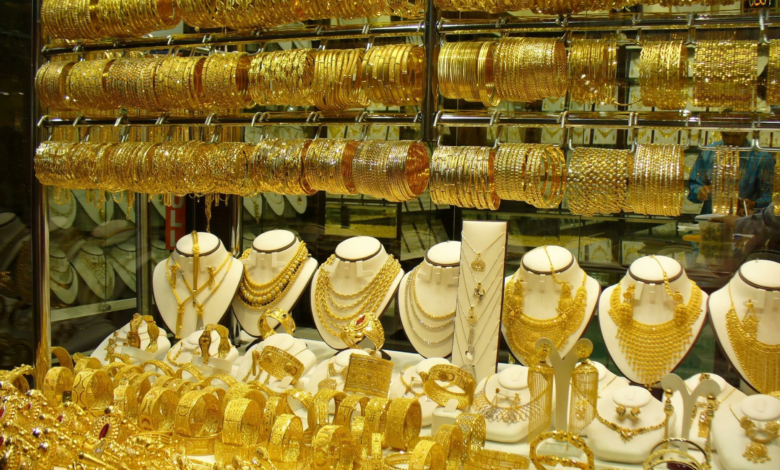

Gold prices in Egypt saw a slight decline during trading today, directly reflecting movements in global markets and relative stability in local economic factors. According to a report by the market-monitoring platform "iSagha," the price of a gram of 21-karat gold, the most traded in Egypt, fell by approximately 50 Egyptian pounds, reaching 6,900 pounds. This decrease coincided with a drop in the prices of other karats, with a gram of 24-karat gold recording around 7,885 pounds, while a gram of 18-karat gold reached approximately 5,914 pounds. The price of a gold sovereign also declined, settling below 55,000 pounds.
Economic context and gold market volatility
Historically, gold in Egypt has been considered a safe haven for savers and investors to hedge against inflation and the erosion of the local currency's value. This role has become particularly prominent in recent years, during which the country has faced significant economic challenges, including a shortage of foreign currency and the emergence of a parallel market for the US dollar. These conditions have led to a near-complete disconnect between the local and global gold prices, with traders adding a substantial premium to reflect the cost and risks associated with obtaining dollars from the parallel market, resulting in an unprecedented price gap.
Reasons for the stability of the pricing gap
The limited decline in prices and the stabilization of the price gap between the local and international markets, currently at around 50 Egyptian pounds per gram, are due to a number of crucial factors. Foremost among these are the economic measures taken by the Central Bank of Egypt in the first quarter of 2024, most notably the complete liberalization of the Egyptian pound's exchange rate. This decision, supported by major investment deals such as the Ras El Hekma project, injected significant dollar liquidity into the economy, eliminating the parallel currency market and contributing to the stability of the official exchange rate. This stability was directly reflected in the gold market, where there was no longer any justification for exorbitant price premiums, and the local market's movements became closely linked to global prices and the natural forces of supply and demand.
Expected impacts on the economy and investors
The stabilization of the gold market and the narrowing of the price gap carry multiple positive implications. Domestically, this stability provides a safer and more transparent environment for citizens wishing to purchase gold for savings or adornment, and reduces the risks of the aggressive speculation the market previously witnessed. On a broader economic level, this development is a strong indicator of the success of recent monetary policies in restoring balance to the economy. It also sends a message of confidence to foreign investors and international institutions that Egypt is on the right track toward achieving sustainable economic stability, thus enhancing its attractiveness as a promising investment destination in the region.