
The impact of disruptions to transport corridors in the Middle East on humanitarian operations
Amid escalating geopolitical tensions, the United Nations Office for Project Services (UNOPS) has issued a stark warning about the serious repercussions of disruptions to transport corridors and airspace in the Middle East. These disruptions are no longer limited to political or military aspects; they now pose a major obstacle to humanitarian operations and commercial supply chains, threatening a multi-dimensional humanitarian and economic catastrophe affecting millions of people.
General context and strategic importance of Middle Eastern corridors
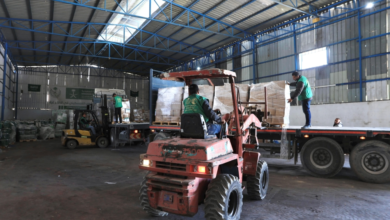
Historically, the Middle East has been a vital link between the world's continents, encompassing strategically important waterways and air routes such as the Red Sea, the Bab el-Mandeb Strait, and the Suez Canal. A significant portion of global trade, energy supplies, and international aid passes through these waterways. Any disruption or tension in these routes immediately impacts maritime and air traffic. Recently, the region has witnessed a marked escalation, leading to the diversion of numerous commercial vessels and restrictions on air traffic, resulting in delays in the arrival of vital shipments, including humanitarian and medical aid destined for countries suffering from chronic crises and armed conflicts.
Expected impact: locally, regionally, and internationally
At the local and regional levels, disruptions to transport corridors in the Middle East threaten the timely delivery of humanitarian aid. These delays risk a sharp rise in the prices of basic food commodities, exacerbating the food security crisis in communities already suffering from poverty and displacement. Furthermore, this situation places immense pressure on the region's fragile health systems, which rely heavily on external medical supplies and life-saving medicines to combat disease outbreaks and treat the sick.
On the international level, disruptions to trade supply chains lead to higher shipping and insurance costs, which ultimately translate into increased inflation for the global consumer. The interconnectedness of the global economy makes the security of transport corridors in the Middle East a matter of global national security, not merely a passing regional crisis.
United Nations efforts and practical solutions
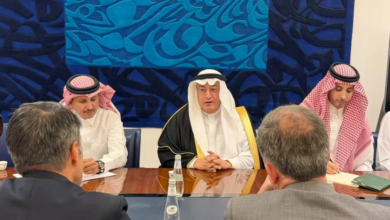
Faced with these complex challenges, the United Nations is striving to find innovative alternatives and solutions to ensure the continued flow of aid. During his address to the annual meeting of the UN Office for Project Services' Client Council, Executive Director Jorge Moreira da Silva clearly stated that "the Office is focusing intensively on scaling up and accelerating practical solutions to overcome current logistical obstacles.".
Supporting civilian infrastructure and continuing field work
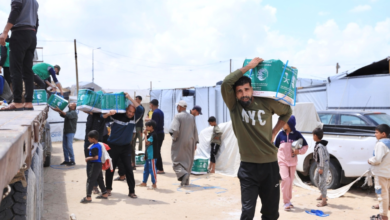
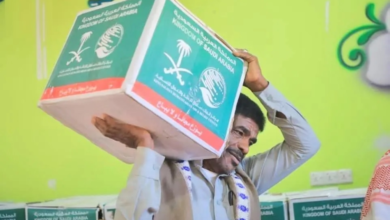
Despite the increased security and logistical risks, Da Silva noted that the UN Office for the Coordination of Humanitarian Affairs (OCHA) teams remain on the ground, working diligently to deliver their vital services. These services include rebuilding and restoring civilian infrastructure damaged by conflict, restoring essential services vital to the survival of the population, and providing direct support to crisis-affected communities to strengthen their resilience.
The Executive Director explained that field teams are continuing their work in providing and distributing fuel for humanitarian purposes, a crucial element for operating hospitals, water pumping stations, and power plants. The office also manages the UN mechanism, authorized by the Security Council, which aims to expedite and monitor the delivery of humanitarian aid in a transparent and efficient manner. Furthermore, the office's role extends to supporting safe access for humanitarian workers to affected areas and actively contributing to mine clearance efforts to secure roads and pathways, thus ensuring a safer environment for both civilians and aid workers and helping to save lives.