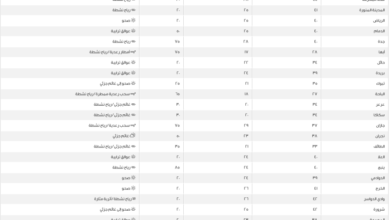
The Kingdom's weather during the first week of Ramadan: Temperature variations

With the arrival of the holy month of Ramadan, citizens and residents of Saudi Arabia are increasingly interested in weather reports to adjust their schedules and daily activities to align with the fasting and spiritual atmosphere of this blessed month. Initial weather forecasts for the first week of Ramadan indicate significant temperature variations across different regions, reflecting the Kingdom's diverse geographical and climatic characteristics.
Weather forecast and temperature variations
The first week of Ramadan is characterized by relatively unstable weather in some areas, with fluctuating temperatures. This period is typically a transitional phase between seasons, resulting in noticeable variations in weather. While central and eastern regions may experience warmer days and milder nights, northern areas and the southwestern highlands may continue to record more moderate and relatively cool temperatures, especially during the late night and early morning hours.
The geographical and climatic context of the Kingdom
Saudi Arabia's vast size and diverse topography directly influence its weather patterns. Coastal areas like Jeddah and Dammam are typically affected by high humidity, which can exacerbate the perceived heat, while inland regions like Riyadh have a dry desert climate with significant temperature variations between day and night. This diversity necessitates that residents follow the daily alerts issued by the National Center of Meteorology to ensure they take necessary precautions, whether regarding clothing or avoiding direct sun exposure during peak hours.
The importance of monitoring the weather for those fasting
Weather forecasting becomes even more important during Ramadan, as it directly impacts the health and endurance of those fasting. Fluctuations in temperature necessitate that fasters pay close attention to the quality of their food and the amount of fluids they consume during Iftar (breaking the fast) and Suhoor (pre-dawn meal) to compensate for fluid loss and prevent dehydration, especially on hot days. Furthermore, knowing the weather forecast helps in planning evening activities and Taraweeh prayers, particularly in open spaces.
General tips and guidelines
Given these expected temperature fluctuations, experts advise adhering to health guidelines and avoiding strenuous physical activity during the hottest hours of the day. It is also recommended to stay updated by official sources, as relevant authorities in the Kingdom are working to provide accurate and continuous weather monitoring to ensure everyone's safety and comfort during the holy month.