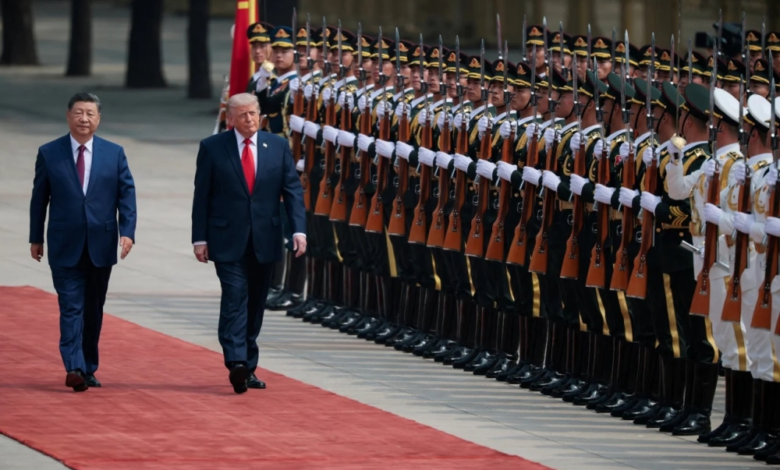

في مستهل قمة تاريخية عقدت في العاصمة الصينية بكين، تبادل الرئيس الصيني شي جين بينغ ونظيره الأمريكي دونالد ترامب عبارات متفائلة عكست رغبة مشتركة في تعزيز العلاقات بين أكبر اقتصادين في العالم. ورغم الأجواء الإيجابية، جاء اللقاء محملاً بملفات معقدة شكلت محور المباحثات بين القوتين العظميين.
تصريحات إيجابية تفتتح القمة
أكد الرئيس الصيني شي جين بينغ خلال محادثاته مع الرئيس ترامب في قاعة الشعب الكبرى، على أهمية التعاون المشترك، قائلاً: “التعاون هو الخيار الصحيح الوحيد للجانبين، والمواجهة تضر بكلينا”. وأضاف شي أن بلديهما يجب أن يكونا “شريكين لا خصمين”، معرباً عن سعادته باستقبال ترامب في أول زيارة دولة له إلى الصين منذ توليه منصبه في عام 2017.
من جانبه، رد الرئيس الأمريكي دونالد ترامب بنبرة ودية، متوقعاً مستقبلاً “رائعاً” للعلاقات الثنائية. وقال ترامب: “إنه شرف لي أن أكون معكم، وإنه شرف لي أن أكون صديقكم”، مضيفاً أن العلاقة بين الصين والولايات المتحدة ستكون “أفضل من أي وقت مضى”. وقد حظي ترامب باستقبال حافل يعكس الأهمية التي توليها بكين لهذه الزيارة، حيث أقيمت له مراسم استقبال رسمية مهيبة.
سياق تاريخي وملفات على الطاولة
جاءت هذه القمة في وقت حاسم للعلاقات الدولية. فمن ناحية، كانت إدارة ترامب قد تبنت خطاباً حاداً تجاه الصين خلال الحملة الانتخابية، متهماً إياها بممارسات تجارية غير عادلة تسببت في عجز تجاري أمريكي ضخم. ومن ناحية أخرى، كان العالم يواجه تهديداً متصاعداً من البرنامج النووي لكوريا الشمالية، وكانت واشنطن تضغط على بكين، الحليف الأبرز لبيونغ يانغ، لممارسة المزيد من الضغط الاقتصادي والدبلوماسي عليها.
لذلك، تركزت أجندة القمة بشكل أساسي على محورين رئيسيين: الاقتصاد والأمن. سعى ترامب إلى تحقيق “علاقة تجارية عادلة ومتبادلة”، بينما كانت الصين تأمل في الحفاظ على استقرار العلاقات وتجنب حرب تجارية مدمرة. وفي الملف الأمني، كان نزع السلاح النووي من شبه الجزيرة الكورية هو الأولوية القصوى.
الأهمية الاستراتيجية وتأثير القمة
تجاوزت أهمية القمة حدود البلدين لتشمل العالم بأسره. فالعلاقة بين واشنطن وبكين لا تحدد فقط مسار الاقتصاد العالمي، بل تؤثر أيضاً على الاستقرار الجيوسياسي في منطقة آسيا والمحيط الهادئ وغيرها. كان المراقبون يترقبون نتائج اللقاء لمعرفة ما إذا كان الزعيمان سيتمكنان من بناء علاقة شخصية قوية تساهم في حل الخلافات، أم أن التوترات ستستمر في التصاعد.
وعلى الرغم من التصريحات الودية، بقيت التحديات الهيكلية في العلاقة قائمة. فبينما أسفرت الزيارة عن توقيع اتفاقيات تجارية بمليارات الدولارات، إلا أنها لم تعالج القضايا الجوهرية المتعلقة بحقوق الملكية الفكرية والدعم الحكومي للشركات الصينية. شكلت القمة محطة هامة في إدارة العلاقات الثنائية، لكنها كانت بداية لمرحلة جديدة من التنافس والتعاون المعقد بين القوتين.