Sudani to Rubio: We reject the use of Iraq to attack countries in the region

A firm Iraqi stance towards protecting national sovereignty
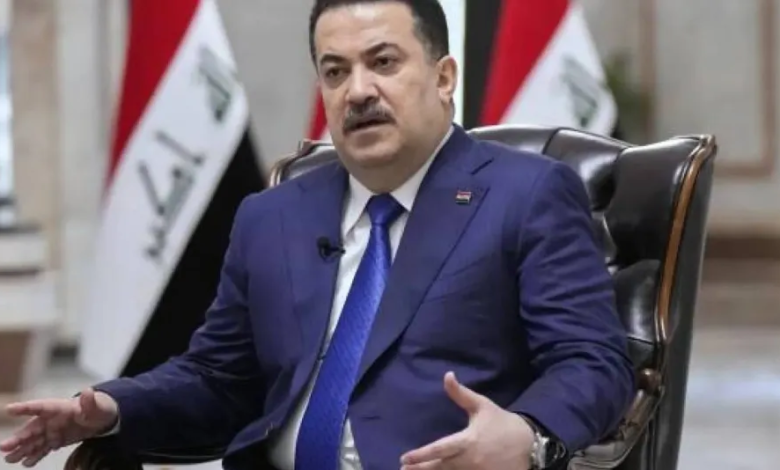
During his discussions with US officials, and specifically in his clear message to Senator Marco Rubio, Iraqi Prime Minister Mohammed Shia al-Sudani reiterated Iraq's firm and unequivocal stance against the use of its territory or airspace as a launching pad for any military attacks against neighboring countries or any other country in the region. This reaffirmation comes amidst highly complex regional circumstances, as the Iraqi government strives to distance the country from the politics of regional and international power struggles and conflicts plaguing the Middle East.
The historical and constitutional context of Iraqi foreign policy
Al-Sudani's statements are based on clear constitutional and historical principles. The Iraqi constitution explicitly prohibits the use of Iraqi territory as a base or transit route for attacks against neighboring countries. Historically, Iraq has suffered for decades from the ravages of wars and conflicts that have depleted its resources and infrastructure, making the current leadership's commitment to Iraq's sovereignty and national security a top priority. In the context of Iraqi-American relations, the Strategic Framework Agreement serves as the foundation for cooperation between Baghdad and Washington, with a continued emphasis on respecting Iraqi sovereignty and limiting the foreign presence to advisory and training roles, excluding any combat missions that could embroil Iraq in unwanted confrontations.
The regional and international importance of Iraq's stability
At both the regional and international levels, these statements acquire exceptional importance given the current tensions in the region, particularly with the continued military escalation in Gaza and Lebanon, and the mutual threats exchanged between regional and international actors. Iraq's involvement in any regional conflict would not be confined to its own borders, but would extend to pose a direct threat to global energy security and the stability of international shipping lanes and trade. Therefore, the international community views Iraq's stability as a cornerstone for ensuring balance in the Middle East, and many Western and Arab capitals support the Sudanese government's efforts to play a mediating role and bridge divides, rather than allowing Iraq to become an arena for settling scores.
Local repercussions and their impact on economic development
Domestically, the policy of non-interference is closely linked to the Iraqi government's program, which focuses on economic development, reconstruction, and attracting foreign investment. The Sudanese government has launched major strategic projects, such as the Development Road project, which require a stable security environment and strong good neighborly relations to ensure their success. Any use of Iraqi territory in military conflicts will inevitably undermine these development efforts, trigger capital flight, and return the country to square one of security and political instability.
Summary of the Iraqi position
In conclusion, al-Sudani's message to Rubio and the entire international community reflects a firm Iraqi political will that rejects any compromise on national sovereignty. Through these positions, Baghdad affirms its commitment to building balanced strategic partnerships with the United States and neighboring countries, based on mutual respect and shared interests, while fully adhering to international laws and conventions that prohibit attacks on the sovereignty of states. This strengthens Iraq's position as an active player in establishing peace and stability in the region.