Mohammed bin Zayed and Al-Sharaa discuss strengthening Emirati-Syrian relations

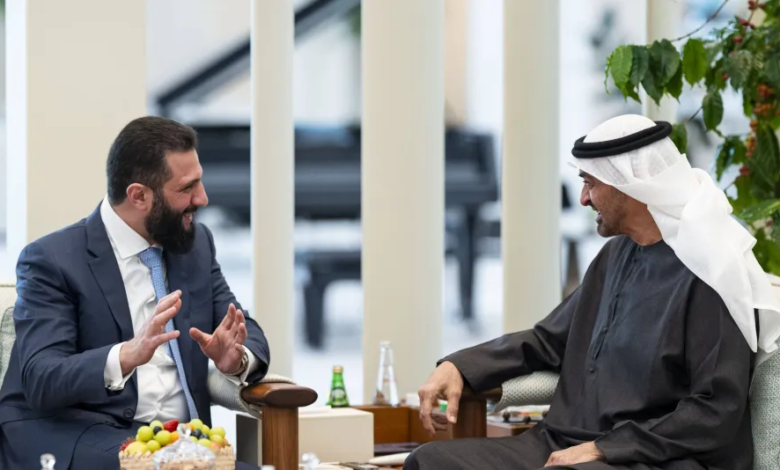
In a notable diplomatic move, His Highness Sheikh Mohammed bin Zayed Al Nahyan, President of the United Arab Emirates, received Mr. Farouk al-Sharaa, former Vice President of the Syrian Arab Republic, in Abu Dhabi. The meeting provided an opportunity to discuss the fraternal relations between the two countries and the latest regional and international developments, reflecting the profound transformations in the political landscape of the Middle East.
Historical background: The return of warmth to Emirati-Syrian relations
This meeting comes amid a growing rapprochement between the UAE and Syria, which has become increasingly evident in recent years. Following a period of diplomatic estrangement after the outbreak of the Syrian crisis in 2011, the UAE took proactive steps to rebuild bridges. The most significant of these was the reopening of the UAE embassy in Damascus in 2018, a strong indication of a shift in the Gulf approach towards Syria. This process culminated in official visits by Syrian President Bashar al-Assad to the UAE in 2022 and 2023, as well as the UAE's pivotal role in supporting Syria's return to its seat in the Arab League in May 2023, ending an isolation that had lasted for more than a decade.
The importance of the meeting and its political implications
The significance of Sheikh Mohammed bin Zayed's reception of Mr. Farouk al-Sharaa lies in several dimensions. Firstly, al-Sharaa is one of the most prominent figures in veteran Syrian diplomacy and a respected figure in various political circles. He is known for proposing visions aimed at a political solution during the early stages of the crisis. Meeting with a figure of his stature could open unconventional channels of dialogue and explore new horizons for a comprehensive political solution in Syria.
Secondly, the meeting reinforces the UAE’s role as a key regional player actively seeking stability and conflict resolution through dialogue and diplomacy. Abu Dhabi pursues a pragmatic foreign policy based on the principle of “zero problems” with its neighbors and believes that sustainable solutions to regional crises, including the Syrian crisis, must be Arab-led. This move underscores the UAE’s leadership in forging a unified Arab approach to addressing the complex challenges in the region.
Expected impact at the regional and international levels
Regionally, this meeting sends a clear message that a new phase in dealing with the Syrian issue has begun, one based on containment and dialogue rather than isolation. This approach is expected to encourage other Arab states to strengthen their diplomatic engagement with Damascus, thus accelerating Syria's full reintegration into the Arab world. Internationally, this move offers an alternative model to the approach taken by some Western powers, and underscores that the countries of the region are best positioned to understand the complexities of their issues and find practical solutions, independent of external interventions that have often proven ineffective.