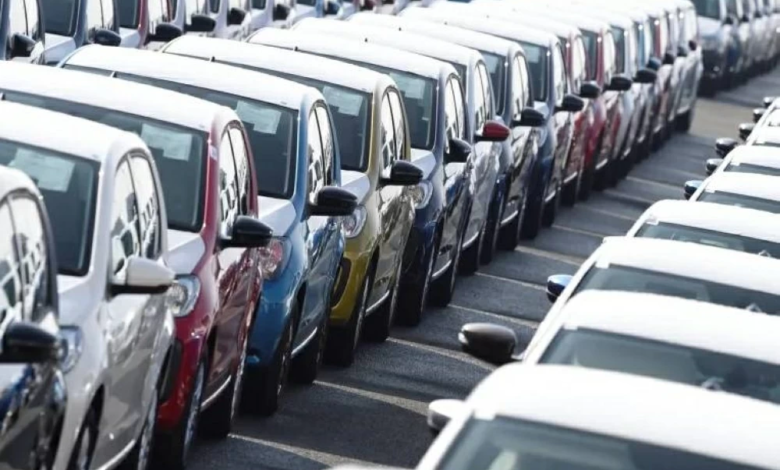

In a move that has sparked widespread concern in European economic circles, the German Ministry of Economic Affairs announced it is coordinating with its EU partners to discuss an appropriate response to the decision by the Trump administration to impose a 25% tariff on European car and truck imports. This decision is part of a protectionist trade policy that has threatened to ignite a full-blown transatlantic trade war.
Estimates of losses and their impact on the German economy
According to a study by the Kiel Institute for the World Economy, one of Germany's leading research centers, implementing these tariffs could cost the German manufacturing sector an estimated €15 billion (US$17.6 billion). The warnings didn't stop there; the institute indicated that the losses could worsen in the long term, reaching around €30 billion, a significant blow to Europe's largest economy.
General context and historical background of the trade dispute
The decision to impose tariffs on automobiles did not come out of thin air; rather, it was the culmination of escalating trade tensions between the United States and its major trading partners, particularly the European Union. The Trump administration adopted the slogan “America First” and sought to address the US trade deficit by imposing tariffs on various goods, most notably steel and aluminum. The US administration justified these measures on the grounds of “national security,” a claim rejected by the European Union, which considered it a violation of World Trade Organization rules and an attempt to impose unjustified protectionist measures.
The importance of the automotive sector and its expected impact
The Kiel Institute warned that this move would deal a "serious blow" to German economic growth, given the pivotal role of the automotive industry. This sector is not only a cornerstone of the German economy and the largest source of industrial jobs, but also a symbol of German engineering quality and innovation worldwide. The impact would extend to giants like Volkswagen, BMW, and Mercedes-Benz, for whom the US market is one of their most important export markets.
The negative impact extends beyond Germany, as the European automotive industry's supply chains are highly integrated. Many components used in German cars come from other European countries such as Italy, Slovakia, Sweden, and Poland. Therefore, any decline in German car production will negatively affect the economies of these countries, threatening the stability of the entire continent's industrial sector and placing additional strain on international trade relations.