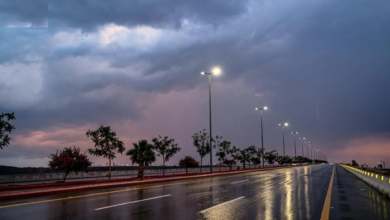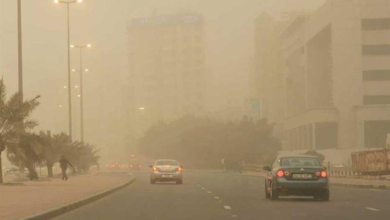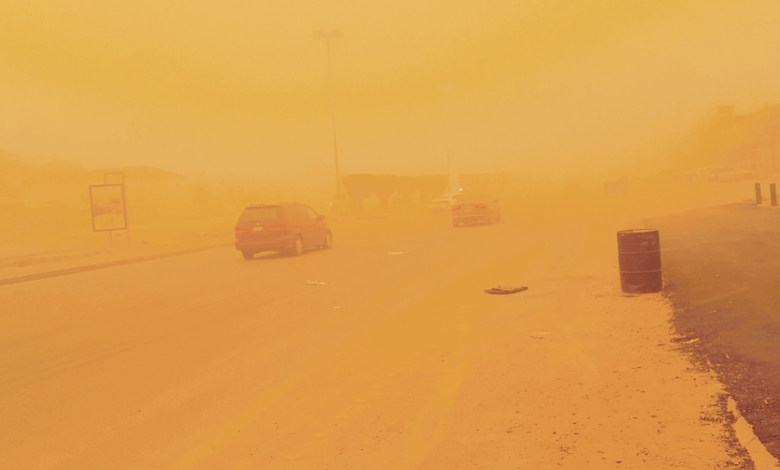

The National Center for Meteorology in Saudi Arabia issued an advanced weather warning for Sunday, indicating that large parts of three northern regions would be affected by strong dust storms that could lead to near-zero horizontal visibility. The warning included the regions of Tabuk, Al-Jawf, and the Northern Borders, where these weather conditions are expected to continue until the evening hours.
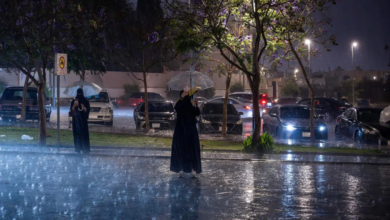
According to the center's report, the weather system is accompanied by strong, high-speed winds that are stirring up dust and sand, reducing visibility to very low levels. The report also indicated that light rain is possible in scattered areas of these regions, which may help improve conditions later, but only after a period of intense dust.
The climatic context of dust storms in the region
Dust and sandstorms are a common weather phenomenon in the Arabian Peninsula, particularly in the northern and central regions of Saudi Arabia. Their occurrence is attributed to the vast desert geography of the region, such as the Great Nafud Desert, which stretches across these areas. These storms are typically active during seasonal transitions, such as spring and autumn, when changes in atmospheric pressure systems cause strong winds capable of carrying enormous quantities of sand and dust over long distances. The seasonal northerly winds are known to be a major contributor to these phenomena, blowing from the northwest and carrying dust from the deserts of Iraq and the Levant towards the Kingdom.
Expected effects and safety measures
These weather phenomena have direct and widespread impacts on daily life and public safety. Locally, transportation is expected to be significantly affected, as poor visibility increases the risk of accidents on highways connecting these areas to each other and to the rest of the Kingdom. Air traffic may also be affected, with the possibility of delays or cancellations of some flights to and from airports in Tabuk, Al-Jawf, and Arar. From a health perspective, asthma and respiratory patients, the elderly, and children are advised to avoid going out unless absolutely necessary and to wear protective masks to shield themselves from inhaling fine dust particles that can cause serious health complications. The Civil Defense Directorate and other relevant authorities have issued warnings to citizens and residents, urging them to take precautions, stay away from open areas, and secure any loose objects.