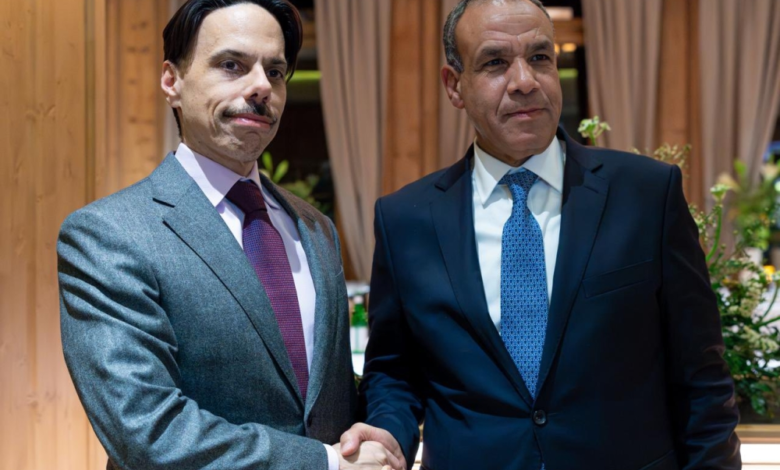
Faisal bin Farhan meets his Egyptian counterpart in Davos to discuss regional developments

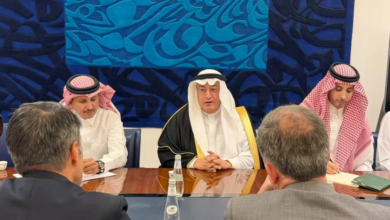
His Highness Prince Faisal bin Farhan bin Abdullah, the Saudi Minister of Foreign Affairs, met yesterday, Tuesday, with Dr. Badr Abdel-Aty, the Egyptian Minister of Foreign Affairs, Immigration, and Expatriate Affairs, on the sidelines of their participation in the 2026 World Economic Forum Annual Meeting in Davos, Switzerland. This meeting comes within the framework of ongoing coordination and consultation between the Kingdom of Saudi Arabia and the Arab Republic of Egypt on various issues of common interest.
Strengthening joint coordination on regional issues
During the meeting, the two sides reviewed the strong fraternal relations between their countries and ways to enhance them in various fields. They also discussed the latest developments in the Arab region and the Middle East. Both sides emphasized the need to intensify joint diplomatic efforts to address the current challenges facing the region, ensuring the strengthening of regional and international security and stability. The ministers also addressed a number of pressing issues, affirming the convergence of Saudi and Egyptian views on the importance of prioritizing dialogue and political solutions to crises.
The importance of the Saudi-Egyptian partnership
These talks are of particular importance given the pivotal role that both Riyadh and Cairo play in the Arab regional system. Saudi-Egyptian coordination is a cornerstone for maintaining stability in the region and a bulwark against foreign interference that threatens Arab national security. These periodic meetings underscore the depth of the strategic partnership between the two countries, a partnership that transcends traditional diplomatic relations and has reached the level of a strategic alliance aimed at protecting the interests of the Arab peoples and supporting their development.
Davos as a platform for diplomatic dialogue
The World Economic Forum in Davos presents a significant opportunity for policymakers, heads of state, and foreign ministers to hold bilateral and multilateral meetings to discuss complex political and economic issues. Foreign ministers from influential countries, such as Saudi Arabia and Egypt, are keen to leverage this international presence to present Arab perspectives on global issues, garner international support for just Arab positions, and explore avenues for economic and investment cooperation that serve the development visions of both nations.
Prospects for future cooperation
At the conclusion of the meeting, both sides agreed to continue coordination and consultation in the coming period to follow up on the outcomes of these discussions and to coordinate their positions in upcoming international forums. This meeting reflects the mutual commitment of the leadership of both countries to expanding bilateral relations to broader horizons, fulfilling the aspirations of the two brotherly peoples and contributing to strengthening the foundations of security and peace in the region and the world.