
The National Center for Meteorology, in its daily report, revealed details of the weather conditions in Saudi Arabia on Thursday, indicating continued weather fluctuations that will affect horizontal visibility in several key areas. This report is part of the ongoing monitoring of weather conditions to ensure the safety of citizens and residents.
Weather details and affected areas
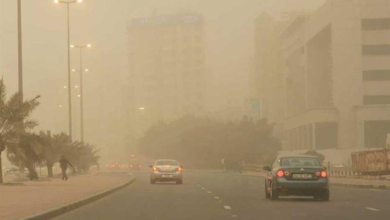
The report indicated that the Kingdom is experiencing continued effects from active winds stirring up dust and sand, leading to a significant decrease in horizontal visibility. The affected areas include large parts of the Riyadh, Northern Borders, Al-Jawf, and Tabuk regions. The effects also extend to the eastern parts of the Makkah and Madinah regions, necessitating caution for those using highways in these areas.
In a related context, the center did not rule out the formation of fog during the night and early morning hours, which may increase the difficulty of visibility, specifically in parts of the Tabuk region and the southern parts of the Eastern Province.
State of the Red Sea and the Arabian Gulf
Regarding maritime navigation, the report indicated that surface winds over the Red Sea would be westerly to northwesterly at speeds ranging from 10 to 25 km/h, with wave heights between half a meter and one meter, resulting in a slight sea state. In the Arabian Gulf, winds would be southwesterly to southeasterly in the northern part and northwesterly to westerly in the southern part, with speeds reaching up to 35 km/h, wave heights reaching up to one and a half meters, and a slight to moderate sea state.
Special alerts for the Eastern Province
The Early Warning System issued a special alert for the Eastern Province regarding blowing dust. The phenomenon is expected to begin at 9:00 AM and continue until 3:00 PM in the governorates of Khafji, Nairyah, and Qaryat Al-Ulya. The effects will persist in Hafr Al-Batin until 6:00 PM. These effects include increased wind activity and a reduction in horizontal visibility to between 3 and 5 kilometers.
The climatic context and weather patterns in the Kingdom
Saudi Arabia has a continental climate characterized by geographical diversity, where the transitional periods between seasons play a significant role in surface wind activity. Dust storms are a frequent natural phenomenon at this time of year, resulting from temperature differences and atmospheric pressure variations that contribute to dust storms, particularly in open and desert areas.
The importance of warnings and their effects
These reports are of paramount importance both locally and regionally, as weather conditions directly impact land, air, and sea traffic. Authorities consistently advise those with respiratory and eye conditions, as well as the elderly, to avoid direct exposure to dust. Drivers on highways connecting different regions are also advised to adhere to speed limits and use appropriate lighting to prevent accidents caused by reduced visibility, highlighting the importance of public awareness in dealing with changing weather conditions.