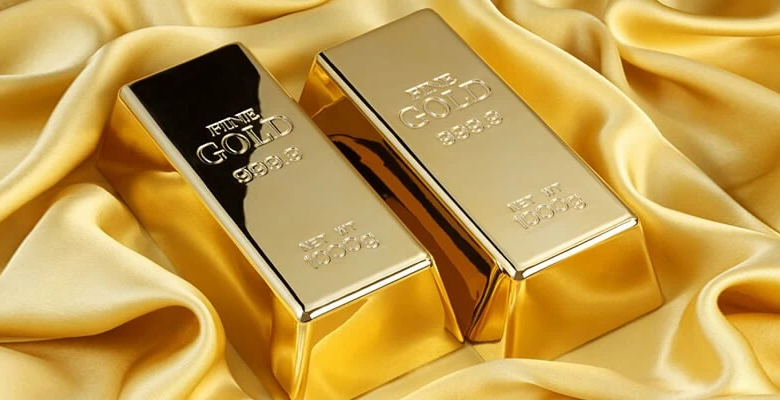

Gold prices saw a notable decline during today's trading session, deepening their losses in global markets. This drop comes amid increasing pressure from the strengthening US dollar and escalating concerns about persistent inflationary pressures, reinforcing expectations that the Federal Reserve (the US central bank) may maintain high interest rates for an extended period. Gold futures for June delivery fell by 0.96%, while the spot price of the precious metal declined by 0.85%, reflecting the cautious and watchful stance prevailing among investors in the precious metals markets.
General context: Gold as a safe haven and its relationship to the dollar
Historically, gold has been considered one of the most important safe havens for investors seeking to protect their wealth during times of economic and geopolitical uncertainty. It is also seen as a hedge against inflation, as it tends to maintain its value when paper currencies lose purchasing power. However, gold prices have a strong inverse relationship with the US dollar. When the dollar index, which measures the performance of the US currency against a basket of major currencies, rises, dollar-denominated gold becomes more expensive for buyers using other currencies, leading to decreased demand and consequently a lower price. The recent 0.2% rise in the dollar index to 98.79 was a major factor putting downward pressure on the precious metal's price.
The impact of Federal Reserve policies
The Federal Reserve's monetary policy decisions are currently the primary driver of gold markets. Economic data indicating persistent inflation or a strong labor market prompts the Fed to adopt a hawkish stance, meaning it maintains high interest rates to combat inflation. Higher interest rates negatively impact gold in two ways. First, they increase the opportunity cost of holding gold, an asset that does not generate returns or interest. Second, higher interest rates support the value of the dollar, further pressuring the price of the precious metal. Therefore, investors closely monitor any statements from Fed officials or economic data that might offer clues about the future path of interest rates.
Precious metals decline across the board
The decline wasn't limited to gold; it extended to other precious metals as well. Silver saw a sharp drop, with its May futures contract falling 4.39%and its spot price dropping by about 4.1%. This significant decline is attributed to the fact that silver, in addition to being a precious metal, has wide-ranging industrial applications, making it more sensitive to global economic growth forecasts. Similarly, spot platinum prices fell by 3.25%, and palladium dropped by 4.57%, confirming that the pressures stemming from the strong dollar and interest rate expectations had a broad impact on the entire metals sector.
Importance and future prospects
This decline in gold prices reflects a shift in investor sentiment, as they weigh the risks of inflation against the appeal of higher returns on interest-bearing assets. Internationally, gold price volatility impacts central bank reserves worldwide. For individual investors, this decline presents an opportunity to buy at lower prices, while it raises concerns for others about their investments. Attention will remain focused on upcoming US economic data, particularly inflation and jobs figures, as well as decisions and statements from the Federal Reserve, which will determine the trajectory of gold and other precious metal prices in the short and medium term.