Faisal bin Farhan and Rubio discuss the sustainability of opening the Strait of Hormuz

Saudi-American talks to ensure maritime security
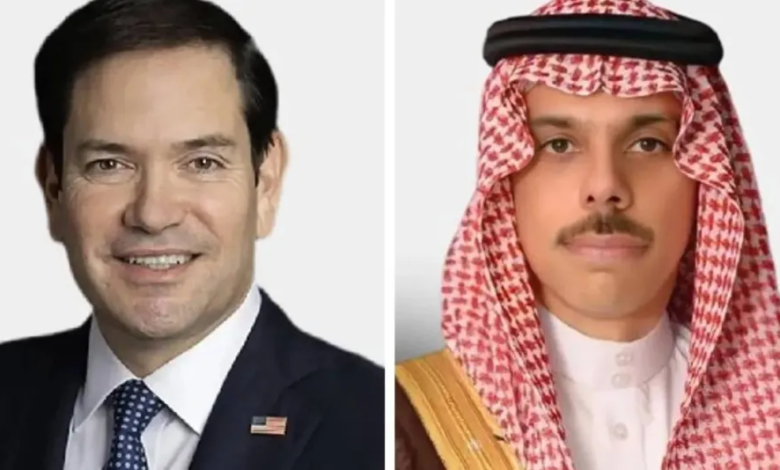
Saudi Foreign Minister Prince Faisal bin Farhan bin Abdullah discussed with senior US official Marco Rubio ways to enhance maritime security and ensure the continued openness of the Strait of Hormuz to international shipping and global trade. These talks come amidst geopolitical tensions in the Middle East, which necessitate high-level coordination between Saudi Arabia and the United States to guarantee the stability of global energy markets and protect vital waterways.
The strategic and historical importance of the Strait of Hormuz
The Strait of Hormuz is one of the world's most strategically important waterways, connecting the Persian Gulf, the Gulf of Oman, and the Arabian Sea. Its historical and economic significance is underscored by the volume of crude oil and liquefied natural gas that transits it daily, estimated at approximately one-fifth of global oil consumption. Historically, this vital waterway has witnessed numerous tensions and attempts to threaten freedom of navigation, consistently placing it at the forefront of the security and political agendas of regional and international powers seeking to ensure uninterrupted supplies.
Regional and international impact of the stability of the strait
Regionally, ensuring the continued openness of the Strait of Hormuz is a top priority for the Gulf Cooperation Council (GCC) countries, particularly Saudi Arabia, one of the world's largest oil exporters. Any threat to or closure of this vital waterway would disrupt supply chains and directly impact the economies of the region's countries, which rely heavily on oil revenues to finance their development plans and future economic projects.
On the international level, the stability of the Strait of Hormuz impacts the entire global economy. The United States, along with the major industrial powers in Europe and Asia, understands that any disruption to shipping through the strait would inevitably lead to sharp and sudden increases in energy prices, potentially plunging the global economy into waves of inflation and recession. Therefore, the US administration, as evidenced by the interest of prominent figures like Marco Rubio, is keen to strengthen strategic partnerships with allies in the Middle East to ensure freedom of navigation.
The depth of the strategic partnership between Riyadh and Washington
These bilateral talks between Prince Faisal bin Farhan and Marco Rubio reflect the depth of the strategic and historical relationship between Riyadh and Washington. For decades, the two countries have worked side-by-side on joint security and military initiatives aimed at protecting waterways, combating terrorism, and countering any destabilizing interventions in the region. These ongoing meetings underscore the shared commitment to proactive action and developing mechanisms for security and diplomatic cooperation to address evolving challenges, ensuring the continued safe and reliable flow of energy supplies to all parts of the world and preserving international peace and security.