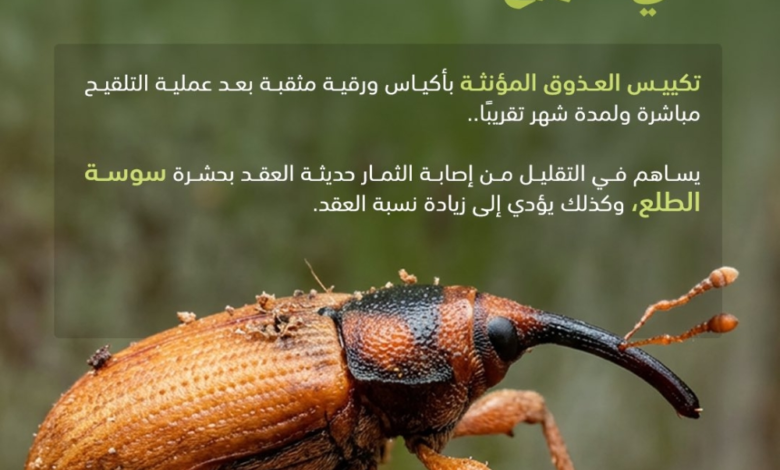

أصدر المركز الوطني للوقاية من الآفات النباتية والأمراض الحيوانية ومكافحتها “وقاء”، توجيهاً هاماً وعاجلاً لمزارعي النخيل في مختلف أنحاء المملكة، مؤكداً على ضرورة الإسراع في عملية تكييس عذوق النخيل المؤنثة باستخدام الأكياس الورقية المثقبة، وذلك مباشرة بعد الانتهاء من عملية التلقيح. ويأتي هذا الإجراء الوقائي الحاسم بهدف حماية ثمار التمر في مراحل نموها الأولى من خطر الإصابة بحشرة “سوسة الطلع”، التي تشكل تهديداً كبيراً على سلامة المحصول وجودته.
السياق التاريخي وأهمية قطاع النخيل في المملكة
تعتبر زراعة النخيل وإنتاج التمور جزءاً لا يتجزأ من الموروث الثقافي والاقتصادي للمملكة العربية السعودية، حيث تمتد جذورها لآلاف السنين. وتعد المملكة اليوم واحدة من أكبر منتجي ومصدري التمور في العالم، إذ تحتضن ما يزيد على 33 مليون نخلة تنتج مئات الأصناف من التمور عالية الجودة. وفي ظل هذا الواقع، تكتسب جهود حماية هذه الثروة الوطنية من الآفات الزراعية أهمية استراتيجية، ليس فقط للحفاظ على مصدر دخل حيوي للمزارعين، بل أيضاً كعنصر أساسي في منظومة الأمن الغذائي الوطني، وتماشياً مع مستهدفات رؤية السعودية 2030 لتنمية القطاع الزراعي المستدام.
مخاطر سوسة الطلع وتأثيرها الاقتصادي
أوضح مركز “وقاء” أن الإجراء الوقائي يستهدف حماية الثمار في طور “الحبابوك”، وهي المرحلة التي تكون فيها الثمار صغيرة وحساسة للغاية. تتسبب يرقات سوسة الطلع في إحداث نقر وحفر داخل الثمار الصغيرة، مما يؤدي إلى تلفها وتساقطها قبل أن تنضج، وبالتالي خسارة جزء كبير من المحصول. وفي حال تفشي الإصابة، يمكن أن تتحول الآفة إلى حالة وبائية مدمرة، تفرغ الشماريخ الزهرية تماماً من محصولها، مما يترتب عليه خسائر اقتصادية فادحة للمزارعين ويؤثر سلباً على إجمالي الإنتاج الوطني من التمور.
التوقيت والآلية الصحيحة للتكييس
وشدد المركز على أن نجاح هذه العملية يعتمد بشكل كبير على الالتزام بالتوقيت الفني الدقيق، حيث يجب أن تتم عملية التكييس بالتزامن مع انتهاء موسم “التنبيت” (التلقيح). وأشار إلى أن استخدام الأكياس الورقية المثقبة حصراً يضمن تحقيق عدة أهداف في آن واحد؛ فهي توفر تهوية مثالية للعذوق تمنع تراكم الرطوبة والأمراض الفطرية، وتحميها من لفحات الشمس المباشرة التي قد تسبب جفاف الثمار، كما تشكل حاجزاً فعّالاً ضد الطيور، كل ذلك دون التأثير على العمليات الحيوية والنمو الطبيعي للثمار حديثة العقد. ويعد هذا الإجراء جزءاً من استراتيجية الإدارة المتكاملة للآفات التي يتبناها المركز لتقليل الاعتماد على المبيدات الكيميائية وتعزيز الممارسات الزراعية الصديقة للبيئة.