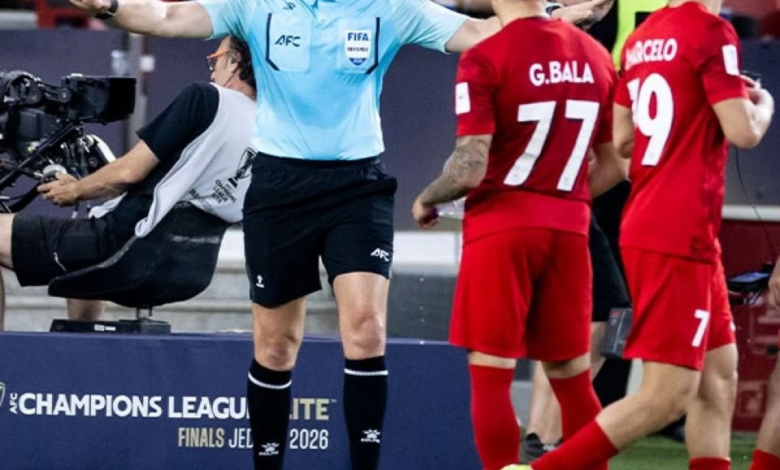
Al-Ahli youth team demands a replay of their AFC Champions League match due to a refereeing error

The Asian Football Confederation (AFC) has announced an official investigation into a complaint filed by the UAE Football Association, on behalf of Shabab Al-Ahli, regarding refereeing errors in their crucial AFC Champions League match. The complaint centers on a controversial refereeing decision that resulted in the cancellation of a legitimate goal for the team. The AFC is preparing to review audio recordings of the conversations between the on-field referee and the Video Assistant Referee (VAR) officials to reach a definitive decision on the UAE's claims.
The incident stems from Al Ahli Club's request to replay their match, citing what they described as a "technical error in the application of the law" by the refereeing team. The UAE Football Association confirmed its full support for the club's position, explaining that the referee's decision to disallow the goal was a misapplication of Article 3 of the Laws of the Game issued by the International Football Association Board (IFAB), which governs the handling of an extra person on the field of play. This article does not permit the disallowance of a goal in such a situation as that witnessed in the match.
General context and importance of the championship
This controversy comes at a time when the AFC Champions League is gaining increasing importance. It is no longer just a sporting competition, but has become a strategic platform for Asian clubs to enhance their international standing and attract significant investment. With the implementation of VAR technology in the later stages of the tournament, the aim was to achieve maximum fairness and minimize impactful human error. However, this incident highlights the ongoing challenges in standardizing the application of the technology and ensuring referees have a precise understanding of the laws of the game, especially in crucial matches that determine the fate of clubs in the continent's most prestigious club competition.
Expected impact of the decision
The decision to be made by the Asian Football Confederation (AFC) carries significant weight that extends far beyond the match result. Domestically, accepting the protest and ordering a replay represents a major victory for Emirati football and Shabab Al-Ahli Club, boosting their chances in the competition. Regionally, this decision will set a legal precedent that other clubs may rely on in the future, raising the bar for oversight of refereeing performance. Internationally, football governing bodies like FIFA closely monitor these cases, contributing to the development of VAR protocols and referee training to ensure the consistent and fair application of the rules worldwide, thus preserving the integrity and credibility of the game.
The UAE protest emphasized that the sequence of events proves play resumed normally and the goal was scored without any significant interference from an unauthorized party, before VAR intervened to disallow it. The club argued that this cancellation was not based on a correct on-field assessment, but rather on a flawed legal interpretation, which falls under the category of a "technical error" that, according to the regulations, necessitates a replay. The UAE Football Association requested that the AFC Disciplinary and Ethics Committee accept the protest and take the necessary corrective measures, including a replay of the match and a comprehensive review of the criteria for selecting referees for crucial matches to ensure that such errors, which cause sporting and financial harm to clubs, are not repeated.