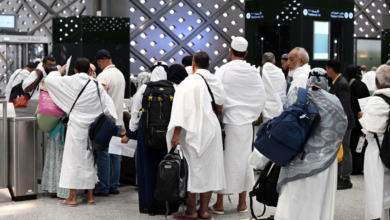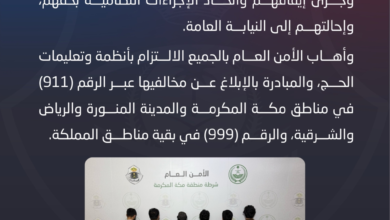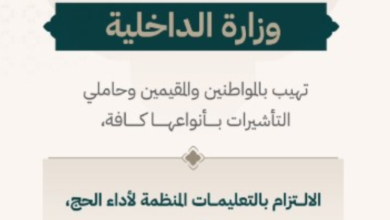

As part of early preparations for the Hajj season, the General Directorate of Public Security in Saudi Arabia announced the activation of regulatory procedures for entering the Holy City of Mecca. Among the most prominent of these procedures, the "Absher" electronic platform has made available a service for issuing entry permits to Mecca for resident family members, facilitating their movement within strict security controls to ensure smooth traffic flow during this busy period.
Steps to issue a Makkah entry permit for residents via Absher
The Saudi Ministry of Interior allows the resident head of household to issue the permit easily and conveniently by following the following electronic steps:
- Direct login to the personal account on the “Absher” electronic platform website.
- Go to the “Family Members Services” tab from the main menu.
- Select the “Entry Permit to Mecca” service.
- Fill in the required data and select “Create an entry permit request to Mecca”.
Entry ban to the holy city begins
Saudi Arabia's Public Security Directorate confirmed the implementation of regulations governing the Hajj season, which require residents wishing to visit Mecca to obtain an official permit from the relevant authorities. Starting Monday, April 13, any resident without a permit will be denied entry to security checkpoints leading to the holy city.
This decision excludes those who possess official documents justifying their entry, including: those with a work permit for the Holy Sites issued by the relevant authorities, those holding a residency permit issued by the Holy City of Mecca, or those with an official Hajj permit. The issuance process is conducted electronically through the "Absher Individuals" and "Muqeem Portal" platforms, with technical integration with the unified digital platform for issuing Hajj permits.
The historical context of regulating entry to Mecca during Hajj
Historically, Saudi Arabia has implemented meticulous crowd management systems during the Hajj season, given the millions of pilgrims who converge on a limited geographical area within a specific timeframe. In past decades, these procedures relied heavily on paper-based and on-the-ground screening, but with continuous technological advancements and the objectives of Vision 2030, these procedures have transformed into a comprehensive digital system. The “Absher” platform, launched to facilitate government services, has become the central hub for managing the movement of people, contributing to the elimination of unregulated Hajj and reducing unnecessary congestion in Mecca before the start of the rituals.
The importance of organization and its local and international impact
On a local level, requiring a permit to enter Mecca for residents helps alleviate pressure on the infrastructure and public services in the holy city, allowing security and health authorities to provide services to authorized pilgrims more efficiently. It also enhances public safety and prevents overcrowding of unauthorized individuals in the holy sites.
At the regional and international levels, these rigorous and well-organized measures send a reassuring message to the entire Muslim world, affirming the Kingdom's complete readiness to protect pilgrims and ensure their safety. These steps also highlight Saudi Arabia's global leadership in managing massive crowds using the latest digital technologies, making the Hajj experience safer and more spiritually enriching for all pilgrims from around the world.