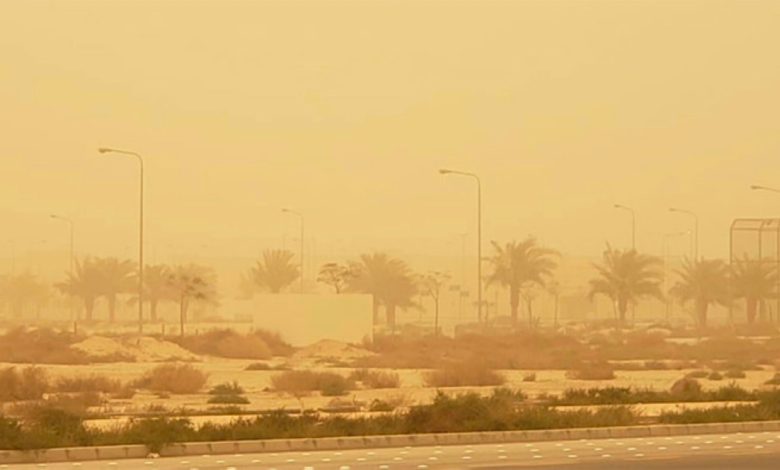

A daily weather report revealed 56 dust storms across the Middle East and Central Asia on May 1st, highlighting once again the environmental and climatic challenges facing this vast region. According to data from agencies monitoring sand and dust storms, these storms were distributed across several countries in the region, with significant variations in intensity and frequency.
Uzbekistan topped the list with 33 recorded dust storms, a figure reflecting the significant weather impact in Central Asia, a major source of dust storms. Iran and Saudi Arabia followed with eight storms each, indicating the continued influence of desert climates on both countries. Pakistan recorded six storms, while Jordan reported only one. The report noted that the total number of recorded dust storm hours was 56, reflecting the intensity of the dust activity and its prolonged impact on air quality and horizontal visibility in the affected areas.
General context: The “dust belt” area
The Middle East, North Africa, and Central Asia are part of the global “dust belt,” a geographical area stretching from the Atlantic coast of West Africa to northern China. This region is characterized by its arid and semi-arid climate and vast desert areas such as the Sahara and the Rub' al Khali, making it a natural source of dust. This phenomenon is exacerbated by human factors such as desertification, land degradation, drought caused by climate change, and poor water resource management, as seen in the Aral Sea crisis, which directly impacted countries like Uzbekistan.
Importance and expected effects
Dust storms have far more than just reduced visibility; their effects extend to various aspects at the local, regional, and international levels. From a health perspective, the fine airborne particles cause severe respiratory problems and increase the incidence of asthma, allergies, and cardiovascular diseases. Economically, these storms disrupt air and land transportation, damage infrastructure and crops, and negatively impact the efficiency of solar power plants. Environmentally, they contribute to soil degradation and water pollution. Given their transboundary nature, addressing this phenomenon requires regional and international cooperation to share data, develop early warning systems, and implement sustainable mitigation strategies.