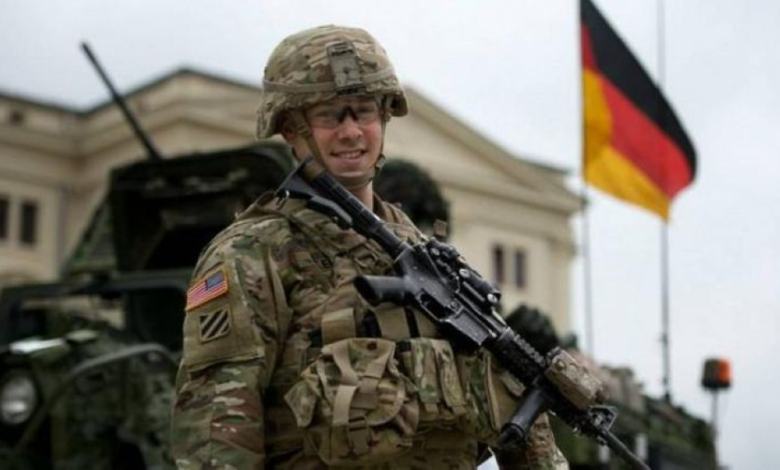

The US Department of Defense (Pentagon) announced a plan to withdraw approximately 12,000 troops from Germany, a move representing a major strategic repositioning of US forces in Europe. According to the official announcement, this step, which reduces the number of US troops in Germany from about 36,000 to 24,000, is part of a comprehensive review of US military deployments worldwide.
Historical background and context of the decision
The American military presence in Germany dates back to the end of World War II, playing a pivotal role in the country's reconstruction and security during the Cold War. American bases in Germany formed a cornerstone of NATO's strategy to deter the Soviet threat. Following the collapse of the Soviet Union, this presence continued as a vital logistical and command hub for American operations in Europe, the Middle East, and Africa, with Germany hosting key bases such as Ramstein Air Base, U.S. European Command (EUCOM), and U.S. Africa Command (AFRICOM).
The decision to withdraw came during the administration of former President Donald Trump, which had long criticized Germany for failing to meet NATO's commitment to spend 2% of its GDP on defense. US officials at the time linked the decision to what they considered Berlin's "failure" to share the defense burden, straining relations between the two traditional allies.
Importance and expected effects
This decision has far-reaching strategic, political, and economic implications. Strategically, some analysts believe that the redeployment of forces, which includes transferring some units to other NATO countries such as Belgium and Italy, could enhance the alliance's flexibility and its ability to address modern security challenges, particularly from Russia. However, others have expressed concern that the withdrawal could send the wrong message to Moscow and weaken the alliance's collective deterrent capability.
On a bilateral level, the move was seen as a blow to US-German relations, a cornerstone of the transatlantic alliance. It drew criticism both in Germany and the US Congress, with some viewing it as a politically motivated rather than a strategic decision.
Domestically, the withdrawal is expected to have an economic impact on German cities and communities that have hosted US bases for decades, as a portion of their economies depend on the presence of American soldiers and their families. Although the Biden administration later announced a freeze on the plan for review, the debate it sparked regarding the future of the US military presence in Europe and burden-sharing within NATO continues.