Jeddah port receives the first groups of pilgrims for 1445 AH with integrated services

The maritime Hajj season begins: Jeddah port welcomes the first groups of pilgrims
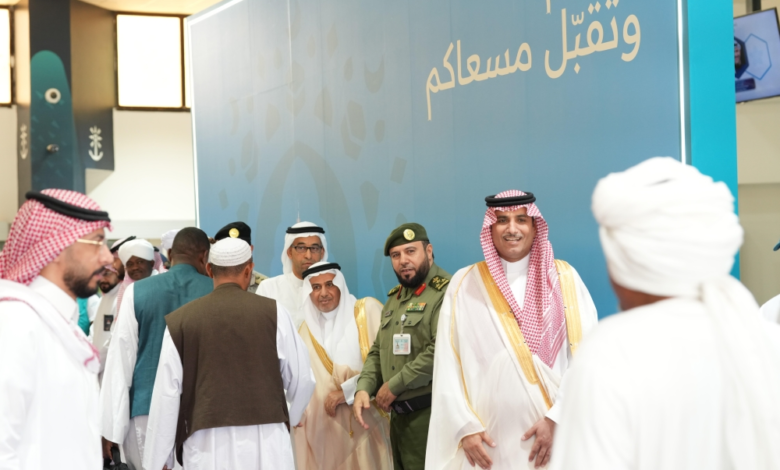
As the countdown to the 1445 AH Hajj season begins, Jeddah Islamic Port welcomed the first group of pilgrims arriving by sea, demonstrating its full operational readiness to receive the guests of God. The group was received by the President of the Saudi Ports Authority (Mawani), Mr. Omar bin Talal Hariri, upon the arrival of the ship “Al-Joudi” carrying 735 pilgrims from the sisterly Republic of Sudan.
The head of the authority affirmed that the ports authority has implemented a comprehensive operational system to ensure the smooth flow of pilgrims from arrival to departure. This is achieved through the deployment of over 420 staff members across various locations within the port. The system encompasses everything from passenger terminals and docks to the land terminal, and extends to maritime operations managed by a specialized team to guarantee swift and accurate procedures and the provision of the highest quality services to the pilgrims.
Historical background and pivotal role of Jeddah port
Jeddah Islamic Port is the main maritime gateway to the Two Holy Mosques and boasts a long and distinguished history of serving pilgrims, spanning centuries. Since the dawn of Islam, Jeddah and its port have been the primary point of entry for Muslims arriving from Africa and Asia to perform Hajj. The port has witnessed tremendous development throughout the ages, transforming into a world-class logistics hub equipped with state-of-the-art technology and infrastructure, thus reinforcing its vital role in serving both the national economy and the pilgrims. These annual efforts reflect the Kingdom of Saudi Arabia's leading role in serving Islam and Muslims, and embody the directives of its wise leadership to provide the utmost comfort and peace of mind for pilgrims.
Detailed operational plans to ensure the comfort of pilgrims
To ensure the highest standards of efficiency, the authority has strengthened its security and operational presence with a comprehensive team comprising 49 security personnel, 48 safety officers, 66 firefighters, and 22 drivers and paramedics. The arrival and departure halls have been equipped to accommodate over 1,300 passengers, with 100 passport control counters and 13 security and customs screening devices. To facilitate baggage handling, 600 advanced trolleys and 50 wheelchairs have been provided to serve the elderly, the sick, and people with disabilities. This system operates according to precise operational plans supported by emergency and business continuity plans.
Effects and importance of receiving pilgrims
The successful reception of pilgrims at Jeddah port has an impact not only locally, but also regionally and internationally. Locally, it stimulates economic and commercial activity in the western region. Regionally, it underscores the Kingdom's immense logistical capacity to manage crowds and organize one of the world's largest gatherings of people. Internationally, it sends a reassuring message to the Muslim world that the Kingdom prioritizes serving pilgrims and invests generously in developing infrastructure to ensure their safety and comfort, thus reinforcing its position as the heart and leader of the Muslim world.
Advanced maritime and security readiness
The preparations included providing an advanced system of maritime and security services, comprising 10 marine tugboats equipped with fire and pollution control systems, 6 support vessels, 6 waste-handling boats, and 2 pollution control vessels. In addition, 10 fire engines, 3 ambulances, 12 security patrols, and 19 safety patrols were deployed, enhancing the port's readiness to handle various operational situations with high efficiency. A fully equipped medical team was also provided and continuously available in the arrival and departure halls to offer immediate medical care and implement health awareness programs for pilgrims.