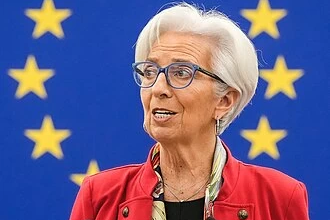

Details of the rise in Germany's inflation rate during March
Official sources, specifically the German Federal Statistical Office, announced in their report released on Friday that Germany's inflation rate rose significantly to 2.8% year-on-year in March. These final figures confirm the preliminary data previously published, reflecting continued price pressures in Europe's largest economy. Compared to previous months, this represents a notable acceleration, as the inflation rate, or the harmonized consumer price index (CPI) used for comparison with other EU countries, stood at just 2.0% in February. This discrepancy between February and March highlights the ongoing challenges facing monetary policymakers.
General context and historical background of inflation
To understand the dimensions of this surge, it is necessary to consider the broader context and historical background of the German and European economies over the past few years. Like many other major industrialized nations, Germany experienced an unprecedented wave of inflation, the highest in decades, following the COVID-19 pandemic and subsequent disruptions to global supply chains. This crisis was exacerbated by the outbreak of the Russian-Ukrainian war in early 2022, which triggered a severe energy crisis across Europe. Germany has historically relied on cheap Russian energy imports, and with the disruption of these supplies, gas and electricity prices skyrocketed, directly impacting production costs and consumer prices. Although inflation has declined from its peak of over 8% in late 2022 thanks to interventions by the government and the European Central Bank, reaching the sustainable target of 2% remains a challenge, as evidenced by the March data.
The importance of the event and its expected local impact
Domestically, Germany's inflation rate of 2.8% has direct repercussions on the daily lives of citizens. The rising prices of basic goods and services are squeezing the purchasing power of German consumers, potentially leading to a decline in domestic consumption, a key driver of economic growth. Furthermore, persistent inflation above target levels is fueling demands from labor unions for wage increases to offset eroding incomes. This could create a wage-price spiral, a scenario feared by central banks, where higher wages lead to increased production costs and, consequently, further price hikes.
Regional and international repercussions
Regionally and internationally, German inflation data is of paramount importance given Germany's position as the largest economy in the Eurozone. Any fluctuations in the German economy directly impact the economic indicators of the European Union as a whole. This unexpected surge in March will complicate matters for the European Central Bank (ECB), headquartered in Frankfurt, Germany. While financial markets had anticipated the bank would soon begin cutting interest rates to stimulate sluggish economic growth, the return of rising inflation may force policymakers to maintain a tight monetary policy and high interest rates for longer than expected. Internationally, investors are closely monitoring these developments, as European interest rate decisions affect exchange rates, particularly the euro against the dollar, which in turn impacts global trade and capital flows.
Summary of economic forecasts
In conclusion, Germany’s inflation rate of 2.8% in March serves as a reminder that the battle to control prices is far from over. Close monitoring of economic data in the coming months will be necessary to determine whether this rise is merely a temporary fluctuation or the beginning of a new upward trend that will require deeper structural and monetary interventions to ensure the stability of both the German and European economies.