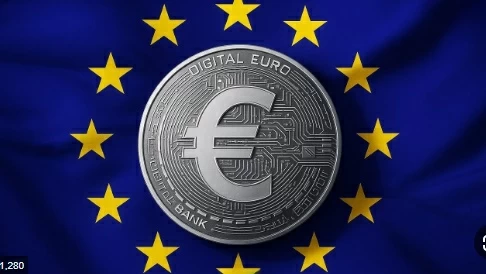

The European Central Bank (ECB) in Frankfurt announced a new strategic step in its journey toward launching a digital euro, signing agreements with three key partners to develop a unified infrastructure to facilitate future payments. These partnerships are part of the project's preparatory phase, which aims to lay the necessary technical and legal foundations for issuing the official digital currency of the eurozone.
General context and historical background
The digital euro project comes as a response to the rapid developments in the world of digital payments and the decline in the use of cash. With the rise of private cryptocurrencies and stablecoins, as well as the dominance of major technology companies in the payments sector, central banks around the world, including the European Central Bank (ECB), are seeking to maintain their role in ensuring the stability of the financial system and providing a universal, secure, and accessible means of payment. The ECB began the investigation phase of the digital euro project in October 2021, and after two years of intensive study, moved to the preparatory phase in October 2023, which is expected to last another two years, leading up to a final decision on its issuance.
Details of the new partnerships and their objectives
The new partnerships include the European Card Payments Cooperation Initiative (EPCI), the Brussels-based non-profit Nexo Standards Association, and the Berlin Group. The primary objective of these alliances is to overcome the current challenge of the lack of an open and unified payment standard in Europe. The current situation relies heavily on standards proprietary to international payment card companies and global digital wallets, limiting competition and local innovation. Through these partnerships, the European Central Bank aims to leverage existing expertise and technical standards to ensure that the digital euro will be interoperable with current payment systems, facilitating smooth adoption for both merchants and consumers.
Importance and expected impact
The launch of the digital euro is of major strategic importance at the local, regional, and international levels. Locally and regionally, the digital euro will provide citizens and businesses in the eurozone with a free and secure electronic payment method, directly backed by the central bank, thereby strengthening confidence in the financial system. It will also contribute to enhancing Europe’s monetary sovereignty and reducing its dependence on non-European payment networks. Internationally, the digital euro can bolster the euro’s global role as a reserve currency and a currency for international transactions, giving the European Union greater economic leverage on the world stage. Piero Cipollone, a member of the ECB Executive Board and head of the digital euro task force, affirmed that “the ECB is determined to ensure that the digital euro complies with existing European standards, which can also be used by the private sector,” noting that the goal is to provide a free European alternative that gives traders and investors the certainty they need for their investments. The ECB consistently emphasizes that the digital euro will complement, not replace, cash, in order to preserve the payment options available to consumers.