
Introduction: The pressures of Brazilian football and the Caio Cesar incident
In an incident reflecting the dark side of sports fanaticism and the immense pressure from fans in Brazilian football, Caio Cesar, a player for Saudi Arabia's Al-Hilal currently on loan to Brazilian club Corinthians, was subjected to a terrifying ordeal and direct threats from a group of fanatical "Ultras." This incident once again highlights the harsh working environment faced by footballers in South America, where emotions extend beyond the pitch and into the players' personal lives on the streets.
Details of the threat incident in the streets of Brazil
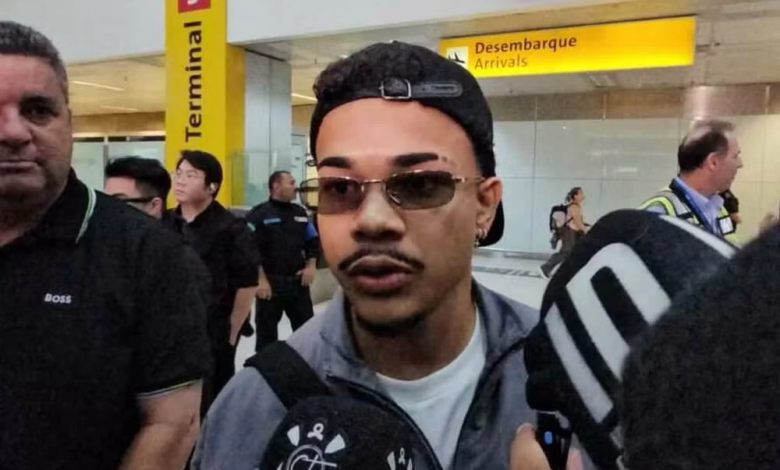
The story began when a group of Corinthians fans intercepted Caio Cesar's car and stopped him while he was driving in a Brazilian street. This encounter was anything but friendly; it turned into a harsh interrogation and a heated confrontation. The angry fans posed direct and skeptical questions about the player's physical and technical readiness for upcoming matches, asking him sharply: "Are you going to play or not? Why do you sometimes say you're ready and other times claim otherwise?".
According to circulating videos and local reports, the player appeared shocked and stunned, unable to comprehend the sudden situation. In a spontaneous reaction born of tension, Caio Cesar smiled, which the aggrieved fans interpreted as mockery, escalating the situation with insults and outright threats demanding victory in the upcoming match or face dire consequences.
The player's career with Corinthians: The curse of injuries
To understand the roots of this public anger, one must examine Caio Cesar's journey since joining the Brazilian team last January from Al-Hilal. His start was very promising; he played only 13 minutes in his debut match, but that was enough for him to create a crucial goal that contributed to his team's 2-0 victory. This early performance left a positive impression on the fans, who hoped he could salvage the team's season.
However, the player's career was soon derailed by a series of injuries. In the following match, he was forced to leave the field after just 15 minutes due to a muscle injury. After a moderate period of treatment and rehabilitation, he returned to action on March 15th in a tough match against Santos. He played for 60 minutes and once again proved his worth by providing an assist, helping the team to a 1-1 draw. But the bad luck continued, as he suffered another thigh injury, keeping him sidelined and out of action for the team until now.
Sports context: Corinthians crisis and the Paulista derby
Caio Cesar's absence coincides with a worrying decline in the results of Corinthians, one of Brazil's oldest and most popular clubs. The team is currently experiencing a genuine crisis, facing the threat of relegation to the lower division, with only two points separating them from the danger zone. This sharp drop in the league standings has intensified the frustration and anger among the fans, who see their team crumbling before their eyes.
What makes the situation even more serious is the timing; these threats come just days before Sunday's highly anticipated match against arch-rivals Palmeiras, the current league leaders. This match, historically known as the "Paulista Derby," is one of the fiercest and most intense derbies in Brazil and the world. Winning this derby is more than just about securing three points; it's a championship in itself for the fans, while a loss could have disastrous consequences for the management and players.
Expected impact and the need to protect players
This incident raises fundamental questions about the safety of professional players in leagues characterized by intense fan violence. The spillover of criticism from the stands and media onto the streets, and the direct threat to players' lives, represents a dangerous trend that demands decisive intervention from security authorities and the Brazilian Football Confederation. Robust security measures must be implemented to ensure a safe sporting environment that allows players to perform at their best without fear or intimidation.