The Houthis and their lavish spending on the anniversary of the slogan in Yemen

Extensive spending in response to a humanitarian crisis
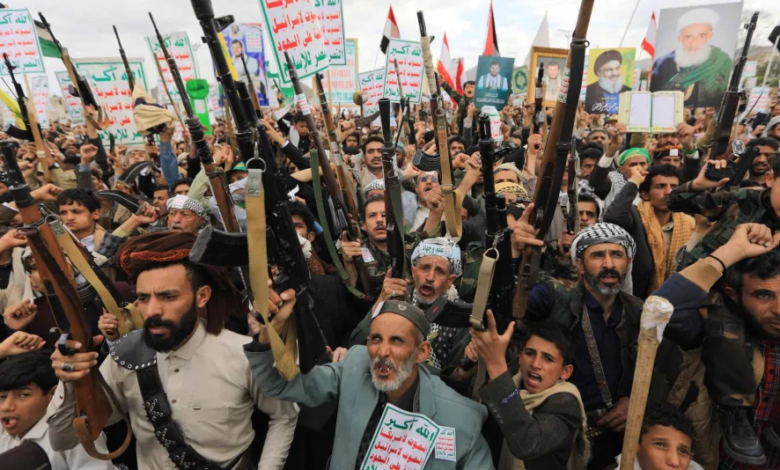
The Houthi group (Ansar Allah) in Yemen is preparing to commemorate the anniversary of “the Cry,” the slogan that forms the cornerstone of its political and religious ideology. Each year, the group organizes massive events and rallies in Sana'a and other areas under its control, accompanied by significant financial expenditures allocated to decorations, banners, and media and mobilization activities. This extravagance has sparked widespread controversy and sharp criticism, especially as it comes at a time when millions of Yemenis are suffering from one of the world's worst humanitarian crises, facing severe shortages of food, medicine, and basic services.
What is “The Scream”? Historical and ideological context
The roots of the “slogan” can be traced back to 2002, when the movement’s founder, Hussein Badreddin al-Houthi, launched it at the Imam al-Hadi Mosque in Saada. The slogan, consisting of “God is Great, Death to America, Death to Israel, Curse the Jews, Victory to Islam,” was not merely a chant, but a declaration of the movement’s new identity and its opposition to American and Israeli policies in the region, which were at their peak at the time, coinciding with preparations for the invasion of Iraq. Many analysts link this slogan to the Iranian revolutionary discourse established by Ayatollah Khomeini after 1979, which has led some to refer to it as the “Khomeini slogan,” signifying the ideological and political connection between the Houthis and Iran.
Local and regional importance and impacts
Domestically, the anniversary of the Houthi slogan serves as a key tool for mobilization and recruitment. The group uses this occasion to consolidate its grip on society, instill its ideology in the minds of youth and future generations through educational curricula and public events, and demonstrate its strength and internal cohesion. However, critics argue that the spending on these events represents a drain on scarce resources that would be better directed toward alleviating the suffering of ordinary citizens.
Regionally and internationally, the commemoration of this anniversary is seen as a continued affirmation of the Houthis' position within the so-called "axis of resistance" led by Iran. The slogan itself carries clear political messages that deepen the polarization in the region and further complicate peace efforts in Yemen. These events also contribute to solidifying the group's image as a force hostile to Western interests in the region, which influences the international community's approach to the Yemeni crisis.