
Details of a series of explosions in Iran targeting Revolutionary Guard headquarters
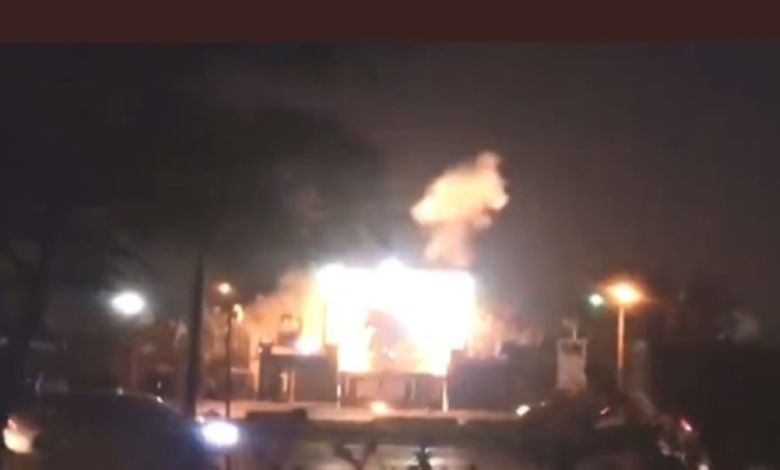
Iranian media outlets, citing news reports broadcast by Al Arabiya, reported a series of powerful explosions targeting Iranian Revolutionary Guard Corps (IRGC) facilities in Shiraz. These sudden events come amid escalating security and military tensions in the region, raising widespread questions about the nature of these attacks and the parties responsible.
The attacks were not limited to Shiraz; they extended to other strategic and vital areas across the country. A series of explosions were heard in both the coastal city of Bushehr and the port city of Bandar Abbas on the Persian Gulf. In a significant development, Ahvaz International Airport was targeted in a second attack that same day, indicating a major and systematic escalation in the frequency of these attacks.
Rapid developments on the ground in Iranian cities
Field reports confirmed six powerful explosions in the southwestern city of Ahvaz, a region of significant strategic and economic importance. Simultaneously, six more explosions rocked Bushehr, a city housing vital and sensitive military installations, some of which were concentrated within the city's naval base. The Iranian capital, Tehran, was not spared from this escalation, with eyewitnesses reporting hearing explosions in its vicinity, further heightening security measures across the country.
General context and historical background of the tensions
These explosions come within a complex historical context characterized by what is known as a “shadow war” between Iran and its regional and international adversaries. Over the past years, numerous Iranian military and nuclear facilities, such as the Natanz facility and military industrial complexes in Isfahan, have been subjected to cyberattacks, sabotage operations, and precision drone strikes. Such incidents are often attributed to Israel or international intelligence agencies as part of efforts to curtail Iran’s military influence and its nuclear and missile programs.
The importance of the event and its expected impact locally, regionally, and internationally
Domestically, these explosions pose unprecedented security challenges for Iranian authorities, particularly given the targeting of key sites such as Revolutionary Guard headquarters, naval bases, and civilian airports like Ahvaz Airport. This direct targeting could disrupt air traffic and create internal unrest, as well as strain security and military resources in an effort to secure the home front.
Regionally, this escalation threatens to heighten tensions in the Middle East. Targeting coastal cities like Bushehr and Bandar Abbas, near the strategic Strait of Hormuz, could prompt Tehran to take preemptive or retaliatory measures, jeopardizing maritime security and the stability of neighboring countries, and increasing the likelihood of direct escalation.
On the international level, the event has global economic and political repercussions. Any military escalation near vital waterways immediately impacts global energy markets, oil prices, and international trade. These developments could also complicate international diplomatic efforts to de-escalate tensions in the Middle East and present the international community with a new challenge in preventing the region from sliding into a wider military confrontation.