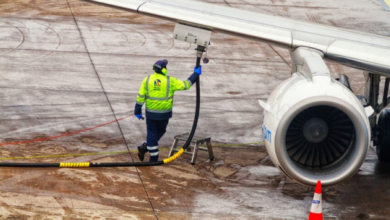

Warnings of a jet fuel shortage crisis amid escalating tensions
Amid escalating geopolitical tensions, estimates from major German airlines have revealed genuine concerns about a potential shortage of jet fuel . These warnings come at a critical time, as there are fears that the ongoing conflict in the Middle East could escalate into a protracted war, particularly given the exchange of attacks and continued tensions between the United States and Israel on one side, and Iran on the other, since late February.
Official statements and direct impacts on supplies
According to Bloomberg, Grazia Vittadini, head of technology, information, and innovation at the German aviation group, told the German newspaper Die Welt that a supply crisis is looming. She explained that "fuel availability is already becoming difficult at some airports in Asia." She added, warning, "The longer the disruptions and de facto closure of the Strait of Hormuz continue, the more critical and complicated the supply situation will become.".
Financial hedging strategies in the face of soaring prices
Despite the significant challenges posed by soaring kerosene (jet fuel) prices, Vittadini noted that the company has largely secured its financial and operational position. This has been achieved through hedging contracts covering approximately 80% of the company's fuel needs for the current year. However, she added, "The continued rise in kerosene prices certainly casts a shadow and ultimately impacts us directly.".
General context and historical background of the importance of the Strait of Hormuz
To understand the scale of the crisis, one must consider the broader context and historical background. The Strait of Hormuz is one of the world's most strategically important waterways, through which roughly one-fifth of the world's daily oil consumption passes. Historically, any disruptions to this strait have been linked to global energy crises, as major refineries, particularly in Asia, rely on crude oil passing through it to produce vital derivatives such as jet fuel. An actual closure, or even the threat of closure, of the strait would immediately impound a significant portion of global jet fuel shipments, which has already forced many refineries in Asia to make the difficult decision to reduce production.
Expected impact of the crisis: locally, regionally, and internationally
This event is of great importance and has far-reaching effects on several levels:
- At the corporate level: Europe's largest airline group drew up contingency plans last week that include the possibility of grounding some aircraft. This measure would be activated if travel demand falls due to rising fuel prices and continued hostilities.
- At the regional level: Refineries in Asia and the Middle East are facing unprecedented challenges in maintaining supply chains, leading to a slowdown in economic growth in the regional energy sector.
- At the international level: The shortage of jet fuel threatens to raise air freight costs and travel ticket prices globally, dealing a severe blow to the tourism and international trade sectors, which are still recovering from previous economic crises.
In conclusion, these warnings reflect the fragility of global supply chains in the face of geopolitical conflicts, putting the global aviation industry to a real test that requires innovative solutions and international intervention to ensure the stability of energy markets.