Four Israeli soldiers killed in southern Lebanon: Details of the escalation

Details of the killing and wounding of occupation soldiers in southern Lebanon
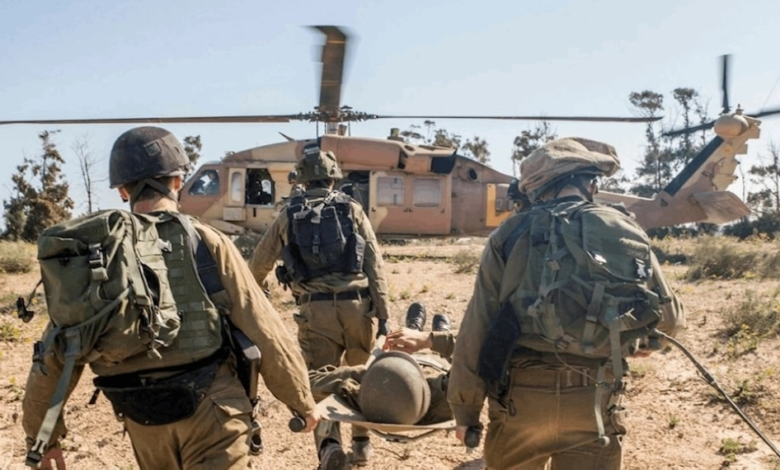
The Israeli army announced in an official statement issued Tuesday that four of its soldiers were killed and two others were wounded in varying degrees of severity during fighting in southern Lebanon. This significant development comes amid escalating clashes between Israeli forces and Hezbollah fighters, bringing the total number of Israeli military casualties since the resumption of intensive combat operations on March 2nd to ten.
The Israeli military statement detailed the incident, noting that three of the soldiers killed belonged to the same battalion and died in direct combat. The statement added that a fourth soldier was also killed in the same incident, but his identity and the circumstances of his death were not disclosed at this time. Regarding injuries, military sources confirmed that one soldier sustained critical wounds requiring immediate medical attention, while another reservist suffered minor injuries.
The historical and field context of the confrontations
To understand the broader context of this event, it is necessary to examine the recent history of tensions along the Lebanese-Israeli border. Since October 8, 2013, the day after the outbreak of the Israeli war on the Gaza Strip, Hezbollah announced the opening of what it termed a “support front” to aid Palestinian factions in Gaza. Since then, the border area, known as the Blue Line, has witnessed daily exchanges of gunfire, artillery shelling, and rocket fire. This ongoing escalation has fundamentally altered the rules of engagement that had prevailed since the July 2006 war, transforming southern Lebanon and northern Israel into a theater of continuous and intense military operations.
Regional and international impacts of the escalation
This event is of paramount importance and has anticipated repercussions on several levels. Locally and regionally, the increasing number of Israeli casualties raises the possibility of a wider military operation, potentially pushing the region toward a full-blown war, a scenario long warned against by political circles. Furthermore, the continuation of these battles has led to a profound humanitarian crisis, with tens of thousands of civilians displaced from southern Lebanese villages and, conversely, the evacuation of northern Israeli settlements. This situation is placing significant domestic pressure on the occupying government to allow settlers to return to their homes.
Internationally, these developments on the ground are causing grave concern within the international community and the United Nations. Major world capitals, particularly Washington and Paris, are intensifying their diplomatic efforts to contain the situation and prevent it from escalating into a wider regional war that could draw in other Middle Eastern actors. International demands are focused on the necessity of adhering to UN Security Council Resolution 1701, which aims to establish stability in the border region and prevent the presence of unofficial armed groups. With the continued loss of life and the escalating violence, the situation in southern Lebanon remains open to all possibilities, pending the decisive developments on the ground and in the political arena in the coming days.