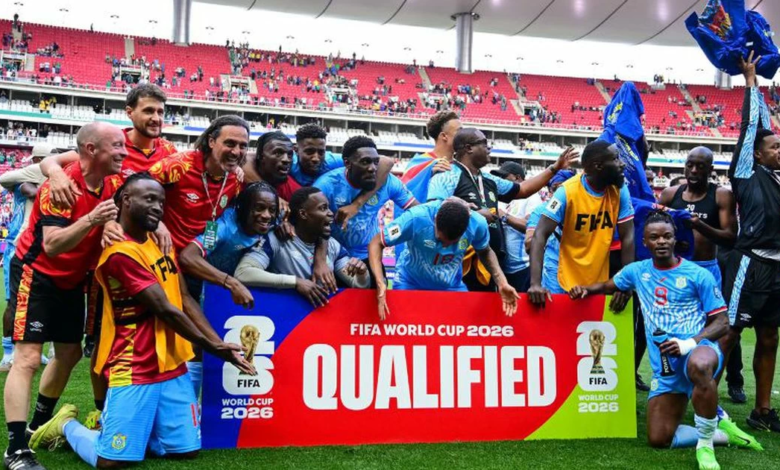

In a historic sporting achievement long awaited for over half a century, the Democratic Republic of Congo national team secured its place in the 2026 FIFA World Cup, ending a 52-year absence from the world's biggest football stage. This qualification was more than just a fleeting sporting event; it transformed into a national celebration, reviving the glory of Congolese football and placing it once again in the global spotlight.
Historical background: From Zaire 1974 to the 2026 World Cup
The last time the Congolese national team appeared in the World Cup was in 1974 in West Germany, when the country was known as Zaire. At that time, they made history as the first sub-Saharan African team to participate in the World Cup. Since then, Congolese fans have endured decades of disappointments and persistent attempts, until the current generation broke this curse and took advantage of the tournament's new format, fulfilling a long-held dream of millions of football fans in the country.
World Cup draw and Cristiano Ronaldo's challenge
The World Cup draw placed the Democratic Republic of Congo in Group 11, a group considered tough and exciting, alongside Portugal, Colombia, and Uzbekistan. Amidst this competitive atmosphere, a fiery statement emerged from the Congolese Minister of Sports, Didier Bodimbo, who issued a direct challenge to the Portuguese football legend. Bodimbo declared with remarkable confidence: "In our first match of the 2026 World Cup, Cristiano Ronaldo will have to cry," indicating his country's determination to pull off a major upset and defeat the star-studded Portuguese team.
Popular celebrations and national unity in Kinshasa
Locally, the capital, Kinshasa, particularly the People's Palace Square, witnessed massive and boisterous celebrations. Thousands of fans gathered to celebrate this historic qualification, joined by the Minister of Sports, who shared in their joy amidst an atmosphere of national pride and unparalleled enthusiasm. In statements reported by Africa Top Sports, Bodimbo emphasized that reaching the World Cup was not a matter of chance, but rather the result of meticulous planning and hard work, adding, "The road was not easy; we fought hard for this achievement.".
Regional and international importance of qualification
The impact of this qualification extends far beyond Congo's borders, resonating regionally and confirming the return of one of Africa's giants to prominence. This achievement represents a tremendous morale boost for African football and highlights the progress of teams that had previously been absent from the scene. The Congolese minister called for national unity in support of the team during its upcoming participation, emphasizing that ambition should not stop at mere participation but should extend to achieving honorable results that reflect the development of football in the Democratic Republic of Congo and leave an unforgettable mark on World Cup history.