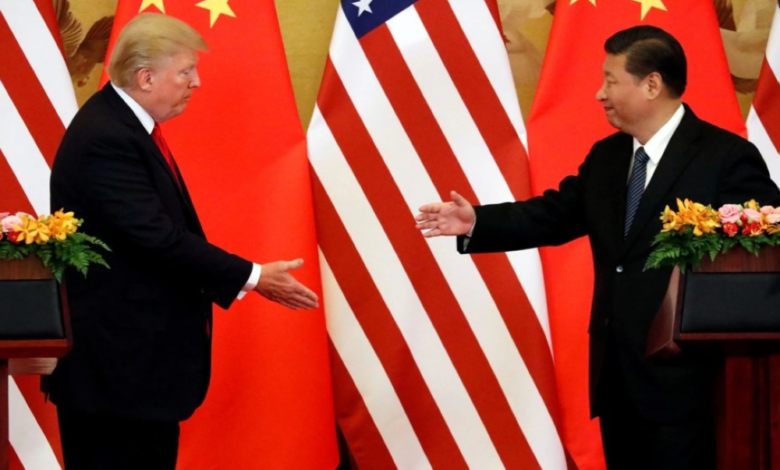
Trump announces Chinese president's visit to the White House and upcoming summit

US President Donald Trump announced a significant development in US-China relations, revealing a planned visit by Chinese President Xi Jinping to the White House toward the end of this year. This announcement came during an interview Trump gave to NBC, which aired on Sunday, where he emphasized the continued direct communication between the leaders of the world's two largest economies.
In the context of strengthening mutual diplomacy, Trump indicated that he, in turn, intends to make an official visit to China during next April, reflecting the desire of both sides to keep communication channels open despite the thorny issues that remain between Washington and Beijing.
Trade relations and the customs tariff file
These statements come at a time of significant complications in relations between the two countries, particularly on the economic front. During the interview, the US president addressed the issue of tariffs, which formed the cornerstone of his policy toward Beijing during his previous term. Trump asserted that China is "paying very high tariffs," emphasizing his personal role in imposing these policies, which, he claimed, have generated hundreds of billions of dollars for the US treasury.
Despite these strict protectionist measures, Trump described his relationship with the Chinese president as "very good," noting that they exchange views regularly, especially on trade and economic issues of concern to both countries.
Background of conflict and strategic competition
These reciprocal visits are of paramount importance given the historical and political context of relations between Washington and Beijing. Since 2018, the two countries have been engaged in a fierce trade war involving reciprocal tariffs that have directly impacted global supply chains. The disputes extend beyond trade to include sensitive geopolitical issues such as the status of Taiwan, sovereignty in the South China Sea, and competition in advanced technology and artificial intelligence.
The international importance of the upcoming summit
The anticipated meeting between Trump and Xi Jinping carries broad implications that extend beyond bilateral relations, impacting the entire international landscape. Observers believe that any rapprochement or understanding between the United States and China sends reassuring signals to global markets, which are highly sensitive to any tension between the two superpowers. Furthermore, discussing outstanding issues face-to-face could help establish parameters for strategic competition, thus reducing the risk of unintended escalation.
The White House hosting of the Chinese president, and Trump's corresponding visit to Beijing, represent an attempt to reset the balance in international relations, and confirm that dialogue remains a necessary tool for managing disputes between great powers, no matter how intense the economic and political competition becomes.