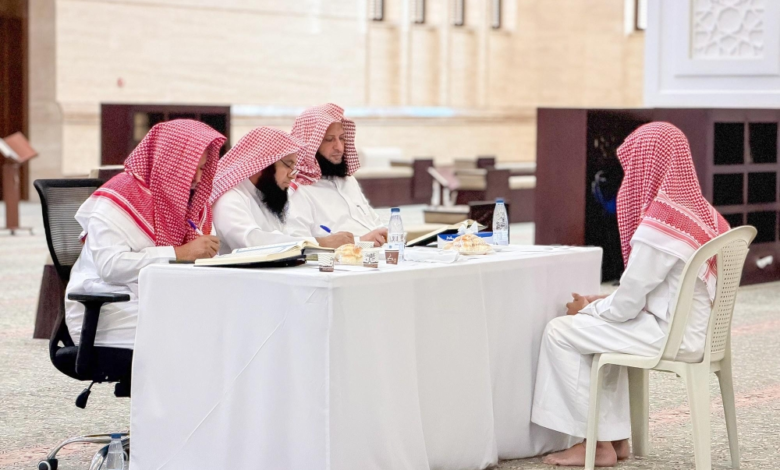

The preliminary rounds of the Custodian of the Two Holy Mosques King Salman bin Abdulaziz Al Saud Competition for Memorization, Recitation, and Interpretation of the Holy Quran for boys and girls, in its 27th edition, commenced on Saturday. This prestigious competition is organized by the Ministry of Islamic Affairs, Dawah and Guidance, and the Jazan region witnessed the start of the competitions in a spiritual atmosphere reflecting the great importance placed on the Book of God Almighty.
Competition and branch details
The King Abdullah bin Abdulaziz Mosque (may God have mercy on him) in Jazan hosted the boys' competitions, while the girls' competitions were held at the Girls' Quran Memorization Center. This stage witnessed wide participation, with (65) male and female memorizers competing in four main categories determined by the competition's secretariat:
- Third branch: Memorizing the entire Holy Quran with good performance and proper recitation.
- The fourth branch: Memorizing 20 consecutive parts with good performance and intonation.
- Fifth branch: Memorizing 10 consecutive parts with good performance and intonation.
- Branch Six: Memorizing 5 consecutive parts with good performance and intonation.
A rich history and continuous care
The King Salman Competition for Memorizing the Holy Quran holds special significance as it bears the name of the Custodian of the Two Holy Mosques and represents a continuation of Saudi Arabia's long history of care for the Holy Quran and its people. Since its inception, the Kingdom of Saudi Arabia has been committed to organizing this competition annually, making it one of the most important Quranic events at the local and regional levels. The 27th edition reflects the continuation of this blessed approach, as the competition aims to connect children and youth with the Book of God and encourage them to engage with it through recitation, memorization, and contemplation.
The social and ethical impact of the competition
The importance of this competition extends beyond mere competition; it has a profound social and educational impact. It directly contributes to promoting moderate Islamic values and rejecting extremism and fanaticism by nurturing the younger generation on the tolerant teachings of the Holy Quran. Furthermore, these qualifying rounds foster a spirit of healthy competition among the sons and daughters of the nation, raising the level of proficiency in recitation and intonation, and showcasing outstanding examples of Quran memorizers who represent the Kingdom admirably in international forums.
Valuable prizes and unlimited support
In an effort to motivate and encourage the winners, the competition has allocated substantial cash prizes totaling 7 million Saudi Riyals. This figure underscores the generous and unwavering support provided by the wise leadership to those who memorize the Quran, and recognizes the efforts of those who strive to master the Book of God. These prizes are among the most valuable in Quranic competitions, reflecting the esteemed position the Holy Quran holds in the hearts of the rulers and the entire Saudi society.