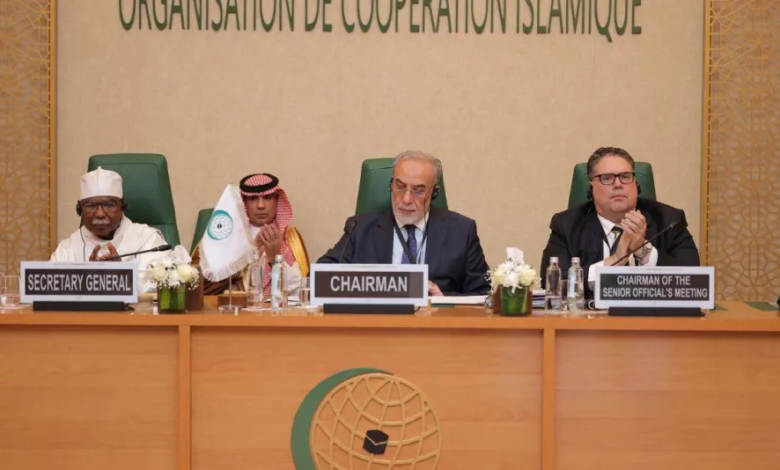
Islamic Cooperation: Unified ministerial stance in support of Somalia's sovereignty

The diplomatic arena witnessed intense activity culminating in a ministerial meeting of the Organization of Islamic Cooperation (OIC), aimed at forging a unified and firm stance regarding the rapidly evolving situation in Somalia. This move comes at a highly sensitive time, as Islamic countries seek to reaffirm their full support for Somalia's sovereignty and territorial integrity, and to stand against any challenges that could destabilize the Horn of Africa region.
Context of the event and historical background
This meeting was not a spontaneous event, but rather the culmination of a long series of efforts by the Organization of Islamic Cooperation (OIC) to support Mogadishu since the outbreak of the civil war in the early 1990s. Somalia has suffered for decades from the absence of a central authority, the proliferation of armed groups, and foreign interventions that have fueled the conflict. As the Somali state has begun to recover in recent years and rebuild its national institutions, new challenges have emerged concerning attempts to undermine national sovereignty and agreements that could threaten Somalia's territorial integrity.
The ministerial meeting focuses on the need to respect international law, the UN Charter, and the Charter of the Organization of Islamic Cooperation, which explicitly stipulate respect for the sovereignty of member states and non-interference in their internal affairs. These principles are a cornerstone of the foreign policy of Islamic countries toward Somalia, particularly in light of recent regional tensions.
Strategic importance and impact of a unified stance
This unified Islamic stance is of paramount importance that transcends the geographical boundaries of Somalia, due to several strategic and geopolitical considerations:
- On the domestic level: This diplomatic support gives the Somali Federal Government strong political cover to continue its efforts in combating terrorism, specifically the Al-Shabaab movement, and to move forward with development and reconstruction programs, strengthening its legitimacy in the face of any external ambitions.
- Regionally, the stability of Somalia is key to the security of the Horn of Africa and the Red Sea region. Any instability in this vital area directly impacts global trade and the security of waterways. Therefore, the Islamic position sends a clear message about the need to maintain the status quo and prevent any unilateral geopolitical changes that could ignite new conflicts.
- On the international level: This consensus constitutes a pressure point in international forums such as the Security Council and the African Union, ensuring that the Somali issue remains at the top of international priorities, and mobilizing the necessary financial and logistical support to rebuild the Somali army and institutions.
The future of relations and next steps
The meeting concluded with a call for intensified consultation and coordination among member states to follow up on the implementation of the resolutions issued, emphasizing that Somalia's security is an integral part of the national security of Islamic and Arab states. This meeting is expected to be followed by practical steps, including high-level diplomatic visits and economic assistance aimed at strengthening the resilience of the Somali people in the face of current challenges.