Britain calls for the opening of the Strait of Hormuz to protect the global economy

Urgent British international action
British Foreign Secretary Yvette Cooper stressed the urgent need to reopen the strategic Strait of Hormuz, warning of the catastrophic consequences of its continued closure on the stability of the global economy. Her remarks came during an emergency international meeting held via videoconference, which included representatives from more than 40 countries to discuss the security of this vital waterway, a key artery for international trade and energy supplies.
The repercussions of the lockdown on economic security
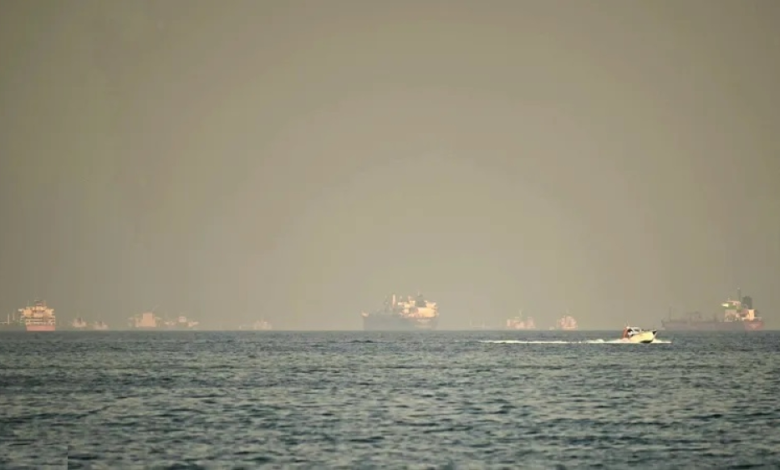
In her opening remarks at the meeting, Cooper stressed that Iran’s “recklessness” in closing the Strait of Hormuz represents a direct blow to global economic security, noting that disrupting shipping threatens supply chains and raises shipping costs to unprecedented levels. The Strait of Hormuz has been virtually closed to commercial shipping since the outbreak of military confrontations and US-Israeli operations against Iran on February 28, leading to a near-total paralysis of oil tanker and commercial vessel traffic.
The strategic and historical importance of the Strait of Hormuz
To understand the strategic importance of this waterway, one must consider the geographical and historical context of the Strait of Hormuz. Located between Oman and Iran, the strait connects the Persian Gulf and the Gulf of Oman to the Arabian Sea and the Indian Ocean. Historically, it is one of the world's most important maritime chokepoints, with approximately one-fifth of the world's daily crude oil consumption passing through it, in addition to enormous quantities of liquefied natural gas. This is not the first time the strait has witnessed tensions; during the "Tanker War" of the 1980s, shipping faced similar threats, and the strait has consistently been a major geopolitical flashpoint during times of international crisis.
Regional and international economic impact
The anticipated impact of a continued closure of the Strait of Hormuz extends far beyond regional boundaries, striking at the heart of the global economy. Major Asian economies, such as China, Japan, and India, are heavily reliant on energy supplies from the Gulf states via this strait. Any disruption or slowdown in these supplies would immediately trigger a dramatic surge in oil and gas prices, fueling global inflation, increasing industrial production costs, and threatening to plunge the global economy into a deep recession, in addition to damaging the domestic economies of exporting countries.
International efforts to ensure freedom of navigation
Therefore, the British initiative, supported by 40 countries, is of paramount importance at this critical juncture. Through this coalition, the international community seeks to establish effective mechanisms to guarantee freedom of navigation, whether through intensified diplomatic pressure or by bolstering maritime security presence to protect commercial vessels. Reopening the Strait of Hormuz is no longer merely a transient regional security issue; it is an imperative to ensure the continued flow of energy and the stability of global markets amidst escalating geopolitical tensions in the Middle East.