Seven sunspots spotted in the sky over Arar: warnings of geomagnetic storms

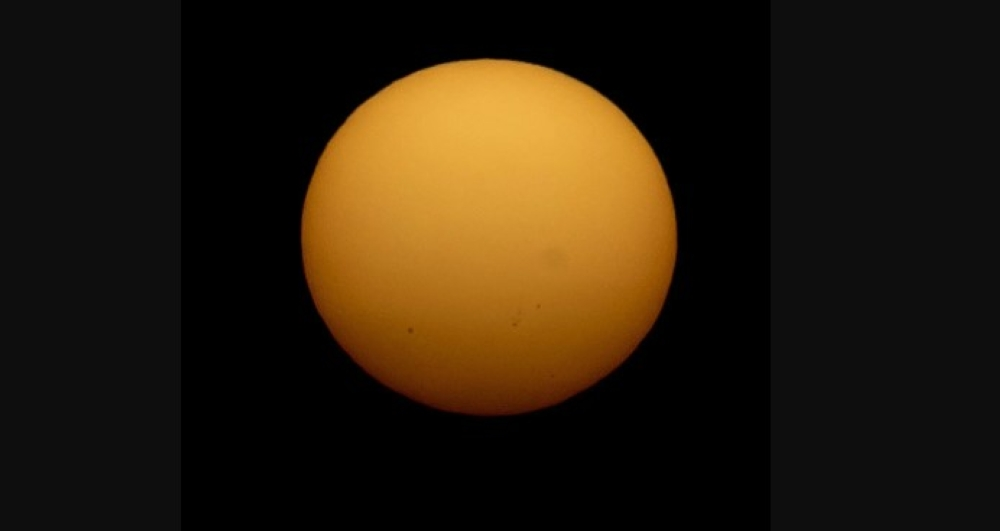
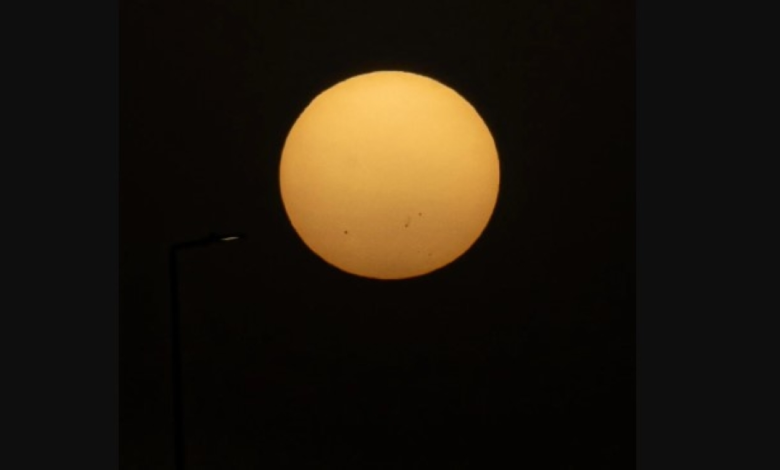
The skies above Arar, a city in the Northern Borders region of Saudi Arabia, witnessed a remarkable astronomical phenomenon: the appearance of seven distinct sunspots on the sun's disk. This celestial event is not merely a passing occurrence, but rather reflects a significant increase in solar activity during this period, keeping scientists and observers on high alert for the effects of space weather on Earth.
What are sunspots and how do they form?
In astronomy, sunspots are defined as relatively dark areas on the Sun's surface (photosphere), characterized by a lower temperature than the surrounding areas. These spots arise from strong and intense disturbances in the Sun's magnetic field, which prevent heat transfer from the Sun's interior to its surface. The appearance of this number of sunspots in the sky over Arar is considered a precise scientific indicator of increased solar activity.
Solar Cycle 25: A Historical and Scientific Context
To understand the significance of this observation, it's important to note that the Sun undergoes regular activity cycles, each lasting approximately 11 years. We are currently experiencing the 25th solar cycle, which officially began in late 2019. Astronomers and global space agencies predict that this cycle will reach its peak activity, or what is known as "solar maximum," between 2024 and 2025. Therefore, the increasing number of observed sunspots is entirely consistent with scientific predictions for this active cycle we are currently experiencing.
Expected effects: Geomagnetic flares and storms
An increase in the number of sunspots is directly related to a higher probability of solar flares and coronal mass ejections. When these massive explosions occur, they eject enormous quantities of charged particles into space. If Earth is in the path of these ejecta, they can cause geomagnetic storms when they collide with Earth's magnetosphere.
Local and international repercussions of solar activity
On an international and technological level, these storms directly affect the upper layers of the atmosphere, potentially causing widespread disruptions to high-frequency wireless communication systems and global navigation (GPS) networks, as well as impacting the trajectories and operation of satellites. Historically, events such as the Carrington Event of 1859 demonstrated the ability of severe solar storms to disrupt technology, as telegraph networks were knocked out. In modern times, sensitive electrical power grids may also be affected.
At the local and regional levels, astronomical observatories in Saudi Arabia are closely monitoring these phenomena to provide data to relevant authorities and reassure the public. It is important to emphasize that these storms do not pose a direct threat to human health on Earth thanks to the protection offered by the atmosphere and the magnetic field. Nevertheless, continuous monitoring from cities like Arar remains essential to protect modern technological infrastructure from any sudden fluctuations in space weather.