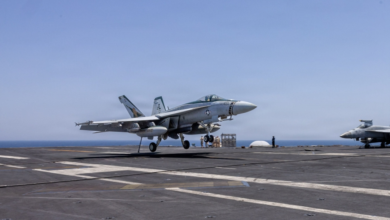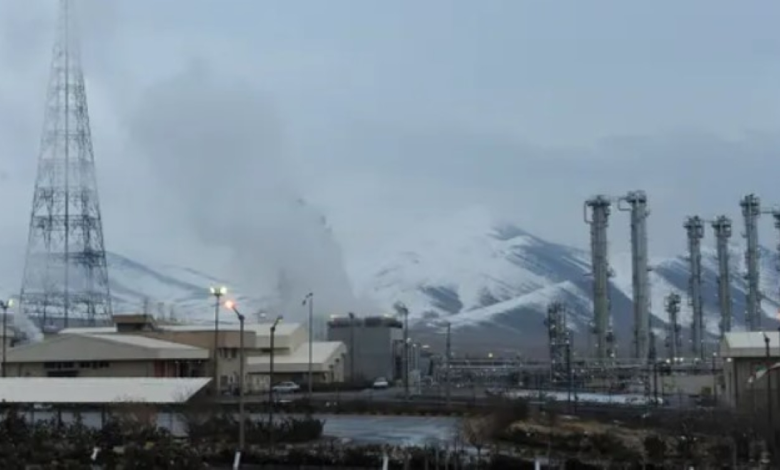

In a dangerous security development reflecting escalating tensions in the Middle East, Iranian authorities announced that strategic and sensitive sites had been targeted by airstrikes. These events come amid reports that airstrikes on Iran, believed to be a joint US-Israeli operation, targeted a vital uranium processing plant in the country's center on Friday, as well as major industrial facilities, raising serious questions about the future of regional stability.
Targeting the Ardakan uranium processing facility
The Atomic Energy Organization of Iran (AEOI) announced in an official statement published on its Telegram channel that airstrikes targeted the Ardakan facility in Yazd province, central Iran. This facility is a crucial component of Iran's nuclear program, typically involved in yellowcake production and uranium ore processing. Despite the sensitivity of the site, the AEOI moved quickly to reassure the domestic and international public, confirming that the attack did not result in any radioactive leakage, thus allaying immediate fears of an environmental or health disaster in the surrounding area.
Blows hit the nerve center of Iranian industry
The attacks were not limited to nuclear infrastructure; they also targeted the heavy industrial sector, a cornerstone of the Iranian economy. Earlier, the semi-official Iranian news agency Fars reported that US and Israeli airstrikes severely damaged two major steel plants. The first was the Khuzestan Steel Company, and the second was the Mobarakeh Steel Company in Isfahan province, considered one of the largest steel production complexes in the Middle East and North Africa region. Reports confirmed that rescue and civil defense teams rushed to the sites to assess the aftermath and evaluate the potential extent of material and human losses.
The historical context of the shadow war
These developments represent a new chapter in the ongoing shadow war between Tehran on one side, and Tel Aviv and Washington on the other. Historically, Iranian nuclear and military facilities have been subjected to numerous cyberattacks and acts of sabotage, most notably the repeated attacks on the Natanz uranium enrichment facility and the assassinations of several prominent Iranian nuclear scientists. Israel and the United States accuse Iran of seeking to develop nuclear weapons, an accusation Tehran consistently denies, maintaining that its program is for peaceful purposes and energy production.
Expected regional and international repercussions
These strikes carry profound strategic implications and far-reaching consequences. Domestically, they pose a significant security and economic challenge to the Iranian government, particularly given the targeting of the steel sector, a major source of hard currency. Regionally, this escalation threatens to heighten tensions in an already conflict-ridden region, potentially prompting Tehran to consider retaliatory options and risking a wider conflict. Internationally, targeting facilities linked to the nuclear program complicates already faltering diplomatic efforts to revive the nuclear agreement and puts global energy markets on edge, fearing disruptions to shipping and global energy supplies.