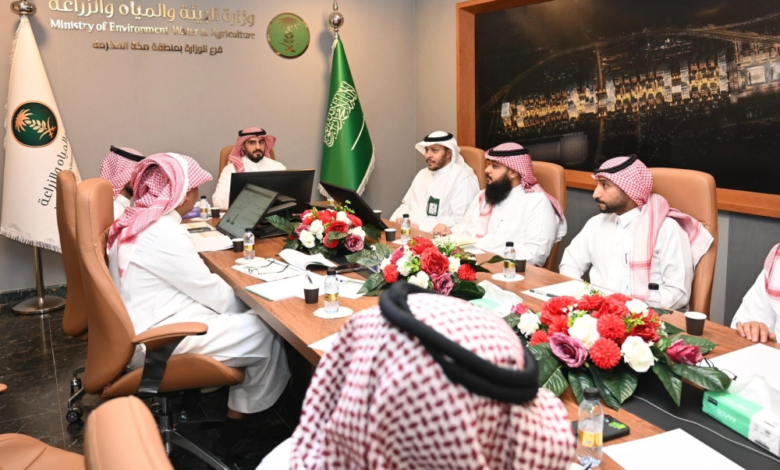
Preparations for the 1447 Hajj season: Proactive plans and strategic integration in Mecca

Early mobilization to raise readiness for the Hajj season of 1447 AH
As part of ongoing efforts to provide the best possible services to pilgrims, the Makkah branch of the Ministry of Environment, Water and Agriculture mobilized its resources early in preparation for the 1447 AH Hajj season. This was demonstrated through a series of intensive coordination meetings with relevant committees, aimed at enhancing preparedness and approving comprehensive operational plans. These meetings addressed mechanisms for effective integration among all relevant entities, while also reviewing key challenges related to the water, agriculture, and environmental services sectors, to ensure smooth operations and provide a healthy and safe environment for pilgrims.
The historical context of the Kingdom's efforts in serving pilgrims
Historically, the Kingdom of Saudi Arabia has given exceptional and unwavering attention to serving the Two Holy Mosques and their visitors, a principle firmly established since its founding. With the increasing number of pilgrims year after year, the Hajj management system has evolved into one of the most complex and successful crowd management operations globally. Early preparations, such as those witnessed for the 1447 AH Hajj season, are a continuation of a long tradition of strategic planning aimed at anticipating logistical and environmental challenges and ensuring the provision of water and food supplies for millions of pilgrims within a specific geographical area and a short timeframe.
Importance and expected impact (locally and internationally)
Domestically, these proactive plans contribute to strengthening infrastructure and supporting the national economy by activating vital sectors and providing seasonal job opportunities. Regionally and internationally, the success of the Hajj season reflects the Kingdom's soft power and its exceptional ability to manage major global events with high efficiency. Providing comprehensive services befitting the pilgrims offers reassurance to millions of Muslims worldwide and underscores the Kingdom's commitment to achieving the objectives of the "Guests of God Service Program," one of the most important programs of Saudi Vision 2030.
Dealing with different scenarios and improving performance
The technical committees at the Ministry of Environment, Water and Agriculture have been working to develop comprehensive and appropriate solutions to address various potential scenarios, contributing to the provision of integrated services that ensure a safe environment for pilgrims. The meetings emphasized the importance of continued coordination and the unification of institutional efforts to achieve the highest standards of quality and safety across all operations. In this context, the Director General of the Ministry's branch in the Makkah region, Engineer Waleed Al-Dughaither, explained that the branch is proceeding according to well-considered proactive plans in cooperation with its partners to guarantee an exceptional Hajj season.
Integration of roles between the public and private sectors
Engineer Al-Dughaither pointed out that the field challenges do not pose an obstacle to the work teams, but rather represent opportunities to develop performance and improve productivity across various vital targeted sectors. He added that the integration of roles between government and private entities is a fundamental element for achieving the required operational efficiency to manage the massive influx of people. He emphasized the branch's complete commitment to monitoring implementation on the ground and raising the level of rapid response in line with the aspirations of the wise leadership in serving pilgrims and achieving the goals of the Kingdom's Vision 2030.