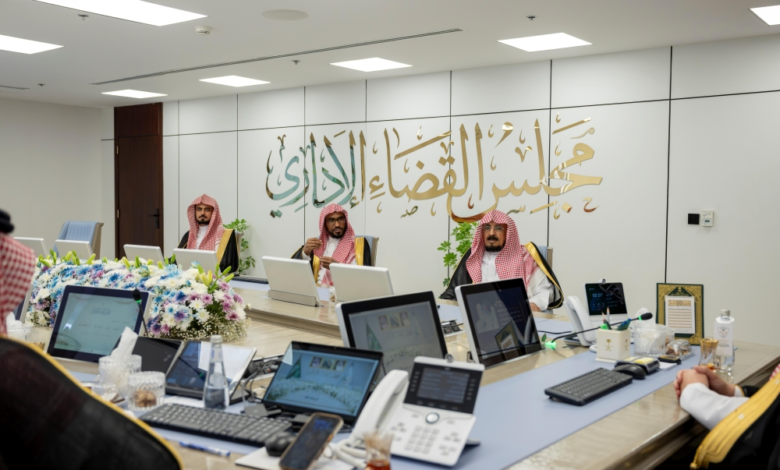
The Administrative Judiciary Council approves new judicial promotions and appointments

In a move aimed at enhancing the efficiency and independence of the administrative judiciary in the Kingdom of Saudi Arabia, the Administrative Judiciary Council held its fifth session, chaired by His Excellency the President of the Board of Grievances and Chairman of the Administrative Judiciary Council, Sheikh Dr. Khalid bin Mohammed Al-Yousef, at the Board of Grievances headquarters in Riyadh. The meeting was attended by all members of the Council to discuss several key topics aimed at developing judicial work and expediting the resolution of cases.
Strategic decisions to support the judicial staff
The Secretary-General of the Administrative Judiciary Council, Sheikh Dr. Ali bin Ahmed Al-Ahaideb, stated that the Council made important decisions during its session, most notably approving the promotion of 28 judges from the Board of Grievances to various judicial ranks. These promotions come within the framework of recognizing and motivating judicial competence and ensuring that judicial positions are filled by those with the necessary expertise to achieve swift justice. The Council also approved the restructuring of several judicial circuits in the two administrative courts in the cities of Jeddah and Mecca, two regions that witness a high volume of administrative cases due to their economic and religious importance.
General context: Developing the administrative judiciary within the framework of Vision 2030
is The Board of Grievances an independent administrative judicial body in the Kingdom, playing a vital role in judicial oversight of administrative actions and the protection of rights and freedoms. These decisions are part of the comprehensive development underway in the Kingdom's judicial sector, in line with the objectives of Vision 2030.The Vision aims to build an effective judicial system characterized by transparency and swift dispute resolution, thereby enhancing the investment environment and ensuring the rule of law. Developing human resources and restructuring judicial departments are considered fundamental pillars for achieving these ambitious goals.
The importance and expected impact of the decisions
Domestically, these decisions are expected to shorten litigation periods and improve the quality of judgments, particularly in vital cities like Jeddah and Mecca. The restructuring of the judicial circuits aims for a more efficient case distribution and greater specialization, which will positively impact litigants, both individuals and institutions. Regionally and internationally, these steps enhance foreign investor confidence in the Saudi judicial system. A strong and effective administrative judiciary guarantees investors a fair and swift mechanism for resolving any disputes that may arise with government entities, thus attracting foreign direct investment and supporting sustainable economic development in the Kingdom.