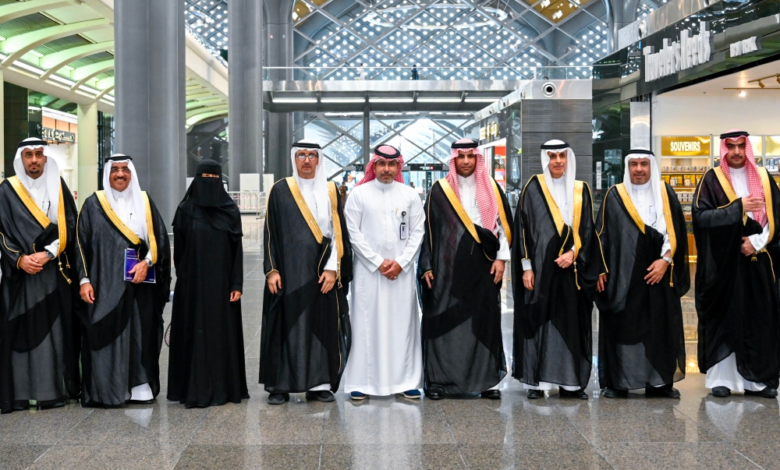
The Shura Council delegation evaluates the services of Jeddah Airport and the Haramain High-Speed Railway

A supervisory visit to evaluate performance and enhance services
As part of its oversight and legislative role, a delegation from the Shura Council's Transportation, Communications, and Information Technology Committee, headed by Committee Chairman Dr. Issa Al-Otaibi, conducted a field visit to several vital infrastructure projects in the Makkah region. The tour included King Abdulaziz International Airport in Jeddah and the Haramain High-Speed Railway stations, with the aim of reviewing operational procedures and assessing the level of services provided to travelers, particularly pilgrims performing Hajj and Umrah.
King Abdulaziz International Airport: The Gateway to the Two Holy Mosques
The delegation began its visit with a tour of King Abdulaziz International Airport facilities, where they were received by the CEO of Jeddah Airports Company, Engineer Mazen Johar, and a number of senior officials. The delegation members listened to a detailed presentation on the airport's operational plans and the achievements made in improving the passenger experience, increasing operational efficiency, and implementing the highest international safety and quality standards. The tour included the various airport terminals, including the Hajj Terminal, which experiences high traffic during the Hajj and Umrah seasons, as well as a visit to the Integrated Operations Control Center and the automated train system that connects the terminals.
The Haramain High-Speed Railway: A vital artery for pilgrims
Following this, the Shura Council delegation visited the Haramain High-Speed Railway stations in Jeddah and Mecca. The delegation met with railway officials, headed by the Director General of Operations, Engineer Yasser Al-Harbi. A comprehensive explanation was provided regarding the operational procedures, the efforts undertaken to facilitate passenger movement between the two holy cities and Medina, and the significant reduction in travel time while ensuring maximum comfort and safety. This visit underscores the paramount importance of the Haramain High-Speed Railway as one of the most significant public transportation projects in the region, which has revolutionized services for pilgrims performing Hajj and Umrah.
Strategic importance within the framework of Saudi Vision 2030
These mega-projects are of paramount strategic importance as they are an integral part of the goals of Saudi Vision 2030, which aims to increase the Kingdom's capacity to accommodate pilgrims to 30 million by 2030. King Abdulaziz International Airport serves as the primary air gateway, while the Haramain High-Speed Railway provides a high-speed land connection, creating an integrated transportation system that ensures smooth traffic flow and offers a unique travel experience. Developing this infrastructure not only serves the religious and tourism sectors but also enhances the Kingdom's position as a global logistics hub connecting three continents and contributes to diversifying national income sources.
Constructive feedback for continuous improvement
During the visits, the delegation members raised a number of inquiries, observations, and suggestions aimed at improving service levels and enhancing operational efficiency. The delegation emphasized the importance of continuous development to keep pace with the anticipated growth in passenger numbers and to fulfill the aspirations of the wise leadership in providing the best possible services to citizens, residents, and visitors to the Kingdom. The delegation included Engineer Khalid Al-Buraik, Dr. Ishraq Rifai, Dr. Hamad Balharith, Dr. Saleh Al-Shamrani, Dr. Abdulaziz Al-Jaloud, Dr. Ali Al-Ali, and Dr. Hisham Al-Fares.