Departure of the aircraft carrier Gerald Ford: New American messages for the Middle East?

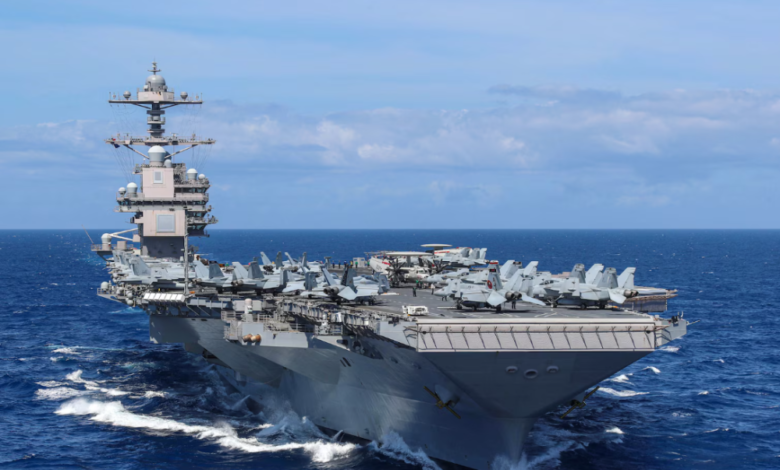
The U.S. Navy announced that the aircraft carrier USS Gerald R. Ford (CVN-78), the newest and most advanced in the U.S. fleet, has begun its return voyage to its home port of Norfolk, Virginia, after completing its extended deployment in the eastern Mediterranean. This move concludes a months-long deployment in a region marked by escalating tensions and raises questions about the repositioning of U.S. forces in the Middle East.
Background and strategic context of the deployment
The aircraft carrier USS Gerald R. Ford and its strike group were deployed to the region following the October 7, 2013, attacks by Hamas against Israel. The primary objective of this rapid deployment was to send a strong deterrent message to Iran and its proxies in the region, most notably Hezbollah in Lebanon, to prevent the conflict from escalating into a full-blown regional war. The carrier's mission has been extended twice to ensure the continuation of this deterrent role amidst the ongoing war in Gaza and skirmishes along the Lebanese-Israeli border.
The importance of the event and its expected impact
The departure of the USS Gerald R. Ford is seen as an indicator of the United States' assessment of the current situation in the region. On the one hand, some might interpret this move as a sign of a reduced likelihood of a large-scale war, especially given that diplomatic channels remain open. On the other hand, the Pentagon emphasizes that the United States still maintains a significant military presence in the Middle East. The Ford's departure does not signify a strategic vacuum, as the aircraft carrier USS Dwight D. Eisenhower and its strike group remain active in the Gulf and the Red Sea, countering Houthi attacks on international shipping.
Domestically, the return of the Ford is part of a normal troop rotation, allowing its crews rest and maintenance after a long and demanding period of service. Regionally and internationally, various powers are closely monitoring this move, analyzing its implications for the US commitment to the security of its allies in the region and its ability to manage multiple crises simultaneously around the world.
Continued US military presence
The US command explained that other warships, including amphibious assault ships like the USS Bataan, will continue operations in the eastern Mediterranean to ensure flexibility and responsiveness to any contingency. This arrangement underscores that the US strategy relies on repositioning and adapting to evolving threats rather than a complete withdrawal, while maintaining a robust naval and air presence capable of supporting allies and deterring adversaries in one of the world’s most volatile regions.