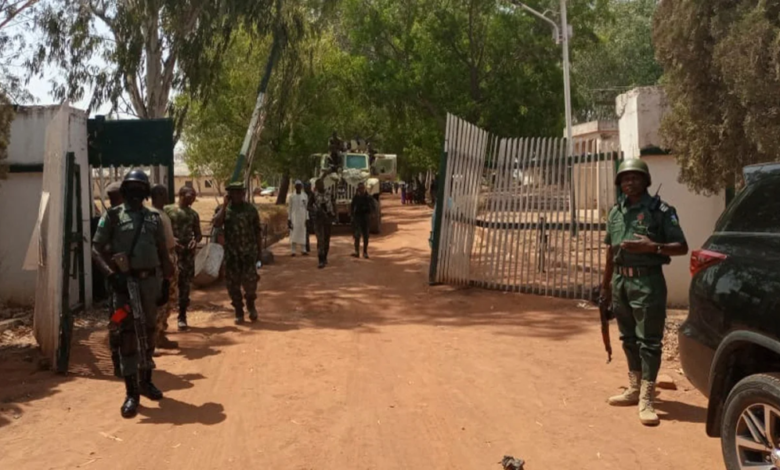

In a worrying security development reflecting ongoing security challenges, Nigerian authorities announced the kidnapping of students. A group of armed men intercepted a number of high school students on their way to take university entrance exams. The attack was not limited to students; it also targeted several passengers on public transport in Benue State, located in the central part of the country.
Details of the armed attack and rescue efforts
The governor of Benue State stated late yesterday evening that the armed attack occurred specifically on the vital Makurdi-Otokpo road. He described the attack as a cowardly act targeting innocent civilians and the future of the country, represented by its youth. While official authorities have not yet released the exact number of those abducted, multiple local media reports indicate that approximately 17 students are missing. Nigerian security forces immediately launched a large-scale search and rescue operation, supported by rescue teams, to track down the perpetrators and secure the safe return of the abductees.
General context and historical background of kidnappings
This incident is not isolated, but rather part of a long and painful series of attacks by armed groups and criminal gangs targeting commuters, schoolchildren, and rural residents. Historically, the phenomenon of targeting schools in Nigeria came to the forefront of international attention in 2014 when Boko Haram abducted hundreds of girls from their school in Chibok. Since then, kidnappings have shifted from purely ideologically motivated acts to a criminal enterprise aimed at obtaining ransom, and this phenomenon has spread from the northeast to the central and northwestern regions, where armed gangs operate, exploiting the vast open spaces and forests for cover.
The importance of the event and its expected impact locally and internationally
Locally, such incidents have a devastating impact on the education sector. With schools and students repeatedly targeted, many parents are forced to keep their children at home for fear of their lives, leading to the closure of hundreds of schools and increasing dropout rates in Nigeria, which already suffers from one of the highest rates of out-of-school children in the world. Furthermore, targeting vital roads in a state like Benue, historically known as the "breadbasket of Nigeria," threatens the food and economic security of local populations and disrupts internal trade.
Regionally and internationally, the authorities’ continued inability to secure roads and schools is a source of grave concern for human rights and international organizations such as UNICEF and Amnesty International, which have long warned that the fundamental right to education is seriously threatened in Nigeria. The deteriorating security situation is also negatively impacting the confidence of the international community and investors, hindering development and stability efforts in Africa’s largest economy. The persistence of this phenomenon is placing increasing pressure on the Nigerian government to adopt a comprehensive security strategy that goes beyond military solutions to address the underlying economic and social causes of the crisis.