
US President Donald Trump has redrawn the contours of his country’s trade policy by approving a new package of tariffs that have affected the pharmaceutical sector, along with restructuring tariffs on metals, in a move that reflects his adherence to the approach of economic protectionism despite its global repercussions.
Pressure on pharmaceutical companies
The new regulations impose tariffs of up to 100% on imported medicines, while giving companies time to move their production lines to the United States, in an attempt to push pharmaceutical manufacturing inwards and reduce dependence on foreign sources.
Under the new approach, large companies are given up to 120 days to comply, compared to 180 days for smaller companies, while companies that commit to building factories within the United States benefit from a reduction in fees to 20%.
Exceptions and agreements
In contrast, the arrangements included exceptions for a number of trading allies, with pharmaceutical exports from the European Union, Japan, South Korea and Switzerland subject to lower tariffs of 15%, while Britain received a temporary exemption allowing its medicines to enter duty-free for three years, as part of a broader trade agreement.
Resetting metal definitions
Regarding metals, the decision maintained a 50% duty on imports of steel, aluminum and copper, while modifying the calculation mechanism to be based on the full value of the final products, instead of the percentages of metals included in them, with the aim of simplifying procedures and reducing manipulation.
Products with limited mineral content, such as certain consumer goods, were also exempted from duties, while tariffs on industrial equipment and electrical network components were reduced from 50% to 15% until 2027, in support of industrial expansion.
Liberation Day anniversary
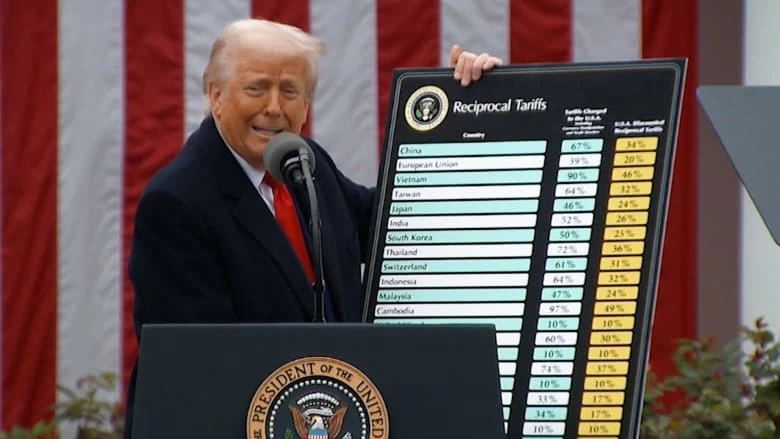
These steps come in the context of what Trump calls “Liberation Day,” on which a year ago he launched a wave of sweeping tariffs that caused turmoil in global markets and disrupted supply chains.
Despite previous legal objections to these policies, the US administration appears to be proceeding with reformulating its trade tools in a way that strengthens domestic manufacturing and rearranges its economic relations with the world.