Despite the tensions, is Russia preparing to continue as a reliable energy supplier?

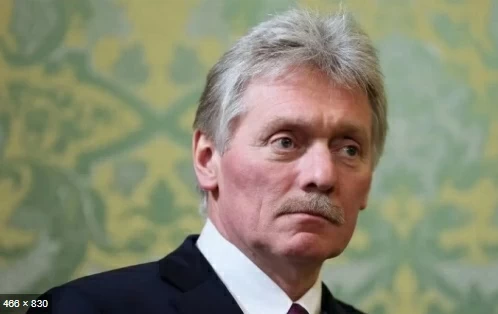
Peskov confirmed at a press conference that Moscow maintains its commitment to securing energy supplies despite geopolitical tensions, at a time when Europe continues to search for alternatives and diversify its sources.
These statements come in conjunction with developments in the gas market, as Peskov indicated that contacts are continuing between Russia and Serbia regarding the gas supply contract, which expires at the end of March, with the possibility of extending it for an additional 3 months.
The biggest energy crisis
Russian Deputy Prime Minister Alexander Novak had previously explained that changes in the world and the struggle for energy resources, including the conflict in the Middle East, have led to the biggest energy crisis the world has seen in 40 years.
Novak said during his speech at the International Institute for Energy Policy and Diplomacy of the Moscow State Institute of International Relations of the Russian Foreign Ministry: “Today, of course, in my opinion, we are witnessing the biggest energy crisis in the last 40 years.”.
Novak pointed out that the wars the world has witnessed over the past 30 or 40 years have been mainly related to the conflict over energy resources.
One-third of the oil trade
Novak added: “It is clear how the United States, for example, has been involved in all its recent armed conflicts, which it initiated, in one way or another, with countries that are important for energy for the whole world and possess energy resources, the latest of which is Iran, and before that Iraq, Kuwait, Syria, Libya, and others.”.
Novak stated that the closure of the Strait of Hormuz affects about a third of the global trade in oil and its derivatives, which is at least 20 million barrels per day, representing the volume of oil and its derivatives that was passing daily through the Strait of Hormuz just 19 days ago.
He added: “It should be noted that this represents about 20% of the current global consumption of oil and its derivatives from oil production. If we look at global trade, it amounts to about 70 million barrels per day, and the 20 million barrels that have stopped being transported to global markets today represent about a third of global trade.”.