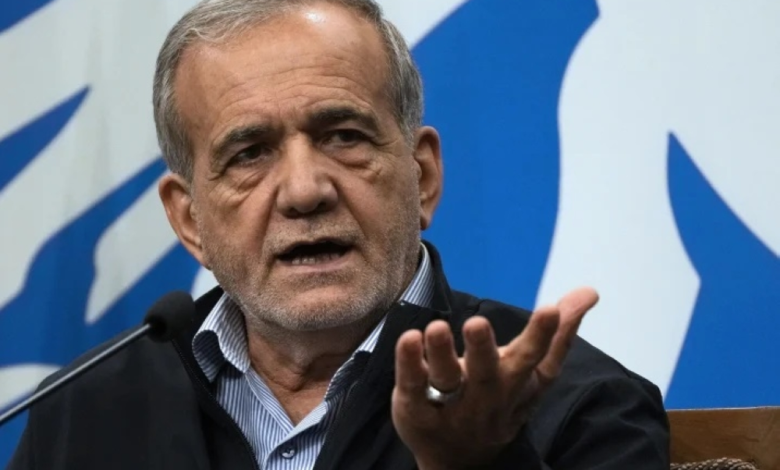
Pezeshkian: There is no disagreement with the Revolutionary Guard, and we will continue to confront American pressure

In statements reflecting the main directions of his new administration, Iranian President Masoud Pezeshkian denied the existence of any disagreements with the Revolutionary Guard, stressing complete agreement with its decisions, while emphasizing that Iran will not succumb to what he described as the “maximum pressure” exerted by the United States of America.
Background and timing of the statements
Pezeshkian's remarks come at a delicate juncture, following his assumption of the presidency in early elections held after the death of former President Ebrahim Raisi. Pezeshkian, who enjoys the support of the reformist movement, is seen as a figure who might open a door to dialogue. However, his initial statements are aimed at reassuring the country's entrenched military and political establishment, particularly the Islamic Revolutionary Guard Corps (IRGC), which wields significant influence across all sectors of the Iranian state, from the economy to foreign policy and national security. Affirming his alignment with the IRGC sends a message, both domestically and internationally, that the fundamental principles of Iranian policy and its defense strategy will remain unchanged regardless of who is president.
The importance of the relationship with the Revolutionary Guard
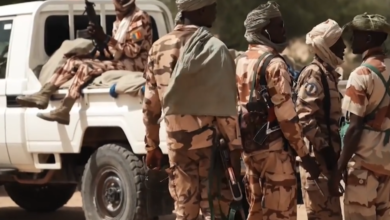
The Iranian Revolutionary Guard Corps (IRGC), established after the 1979 Islamic Revolution, is a pivotal player in Iran's power structure. It is not merely a formidable military force, but also possesses extensive economic, political, and media influence. Its positions and decisions are crucial in shaping major strategic issues, such as the nuclear program and regional influence in countries like Iraq, Syria, Lebanon, and Yemen. Therefore, any Iranian president seeking to ensure the stability and success of his administration needs to maintain a harmonious working relationship with this powerful institution.
Confronting US pressure and tensions in the Strait of Hormuz
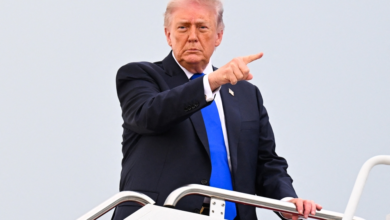
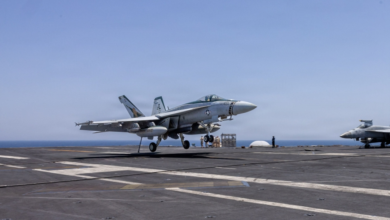
Pezeshkian pointed to the continued US pressure to force Iran to make concessions, emphasizing that his country will not accept American demands. This stance falls within the framework of the “active resistance” strategy adopted by Tehran since the US withdrawal from the nuclear agreement in 2018 and the reimposition of harsh economic sanctions. These tensions are particularly evident in the Gulf region and the Strait of Hormuz, a vital artery for global oil transport. The region has witnessed frequent incidents in recent years, including the seizure of oil tankers and skirmishes between Iranian and American forces. In this context, statements by former US officials, such as President Donald Trump, regarding military operations to secure navigation in the Strait reflect the level of tension the region has reached in the past, a situation the current Iranian administration seeks to demonstrate its readiness to confront.
Potential impacts at the regional and international levels
Regionally, Pezeshkian's messages signal to Iran's allies that its approach of support and resistance will continue, while informing adversaries that Tehran will not back down from its strategic positions. Internationally, these statements establish a clear framework for any potential future negotiations with Western powers, as Iran asserts that it will not come to the negotiating table from a position of weakness or under duress. Therefore, the onus remains on international diplomacy to find a formula for dealing with Iran that takes into account these principles emphasized by the new president.