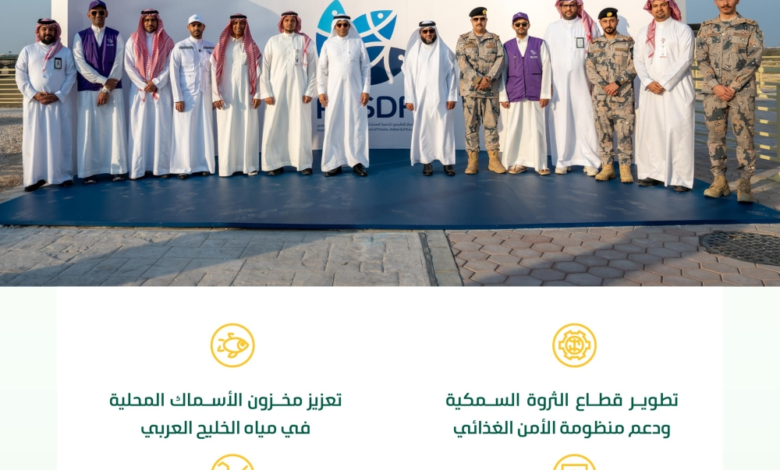
The Ministry of Environment takes over the fisheries center from Aramco and releases 100,000 larvae into the Gulf

The ministry explained that it will oversee the operation of the regional center and ensure its operational readiness, in cooperation with the relevant authorities necessary to achieve its objectives.
Improving the efficiency of fish farming
The ministry explained that this initiative comes within its efforts, represented by the National Program for the Development of the Livestock and Fisheries Sector, to promote marine sustainability and raise the efficiency of the fish farming system through the latest technologies and scientific standards, noting the launch of a qualitative initiative by the regional center, which was represented by the release of 100,000 larvae of seabream fish into the waters of the Arabian Gulf in several batches, confirming the Kingdom’s commitment to protecting the marine environment and developing its natural resources.
The ministry indicated that this project is a strategic initiative that contributes to enhancing fish stocks in the Arabian Gulf, preserving biodiversity, and supporting the sustainability of local fisheries. It also contributes to strengthening food security, reducing reliance on imports, and improving the efficiency of the fishing sector, which will positively impact fishermen's incomes and the economies of coastal areas.
The project has a production capacity of 10 million marine fish larvae annually, and its facilities cover an area of 243,000 square meters, in addition to a 300,000-square-meter mangrove lagoon to support ecological balance. The project's future plan includes producing other selected fish species, along with parallel programs for developing marine ecosystems, such as aquaculture, coral reefs, seagrass beds, and mangrove plantations.