Iranian plans to impose fees in the Strait of Hormuz and their global impact

Details of the Iranian plan to impose fees in the Strait of Hormuz
In a move that could spark considerable international controversy, an Iranian parliamentary committee has approved plans to impose fees on commercial vessels and oil tankers transiting the strategic Strait of Hormuz. According to Iranian state television, the plan is part of Tehran's efforts to boost revenue and assert its control over vital waterways. A member of the Iranian parliament's security committee explained that the plan includes financial arrangements and systems for collecting fees in Iranian rials, reflecting Tehran's desire to bolster its currency in the face of sanctions. The plan also aims to reinforce Iran's sovereign role in the region, emphasizing the importance of cooperation with Oman, which shares control of the other side of the strait.
The plan was not limited to financial aspects; it also included crucial political and security dimensions. It contained provisions explicitly prohibiting ships belonging to the United States and Israel from passing through the Strait. Furthermore, the plan proposed banning navigation for ships from any other country participating in imposing economic or political sanctions on the Islamic Republic of Iran, thus posing complex legal and logistical challenges to global trade.
Historical context and strategic importance of the Strait of Hormuz
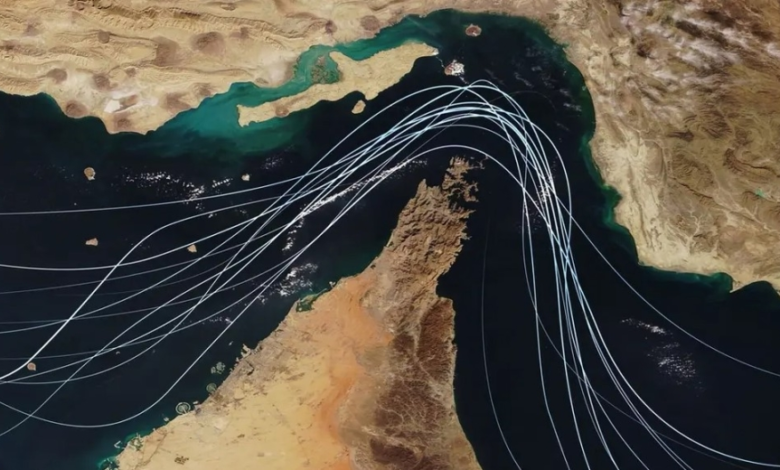
The Strait of Hormuz is one of the world's most important and sensitive waterways, connecting the Persian Gulf, the Gulf of Oman, and the Arabian Sea. Historically, this strait has been a bargaining chip used by Iran during times of geopolitical crisis, from the Tanker War of the 1980s to repeated threats to close it in response to Western sanctions. According to the United Nations Convention on the Law of the Sea, the Strait of Hormuz is an international waterway subject to the right of innocent passage, making any attempt to impose unilateral fees or prevent certain vessels from transiting it a violation of established international norms and potentially provoking a strong response from the international community.
Expected repercussions on the global economy and shipping
The Strait of Hormuz is of paramount importance as a vital artery for global energy flows. Approximately one-fifth of the world's crude oil production passes through this narrow strait daily, along with enormous quantities of liquefied natural gas, primarily from the Gulf states. Regionally, any disruption to shipping would directly impact the economies of Middle Eastern energy-exporting nations and hinder their development plans.
On the international level, the mere threat of a partial or complete shutdown of the Strait of Hormuz immediately triggers panic in global markets. Past experience has shown that tensions in this region lead to a sharp and sudden rise in fuel prices, negatively impacting global inflation rates and increasing production and transportation costs. Disruptions to supply chains would also affect major consuming nations in Asia and Europe. From a security perspective, such Iranian actions could prompt major powers to bolster their military presence to ensure freedom of navigation, further increasing the likelihood of escalation in one of the world's most volatile regions.