Hamas and mediators' moves to break the deadlock in the Gaza agreement | Details of the negotiations

Introduction: Intensive efforts to end the stalemate in Gaza negotiations
The political and diplomatic arena is currently witnessing renewed and intensified activity by Hamas and international and regional mediators, aimed at breaking the deadlock that has gripped the Gaza agreement. These efforts come amidst a worsening humanitarian crisis in the Gaza Strip and mounting international pressure to reach a comprehensive ceasefire that guarantees the exchange of prisoners and detainees and paves the way for the delivery of urgent humanitarian aid.
General context and historical background of the event
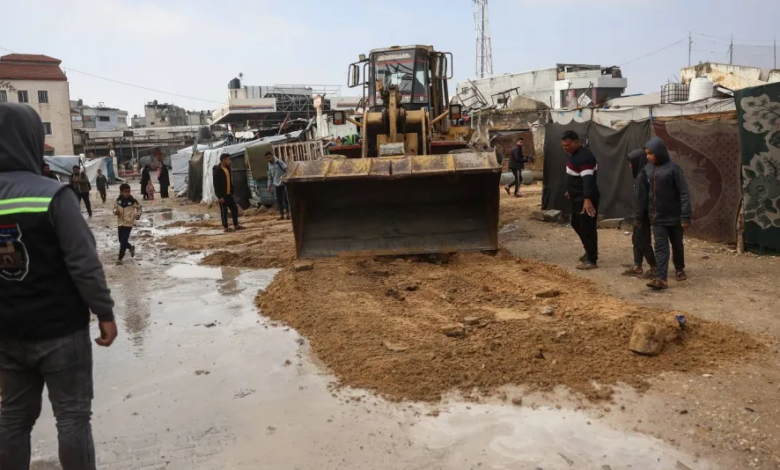
Since the outbreak of war on October 7, 2023, the Gaza Strip has witnessed unprecedented destruction and a devastating humanitarian crisis. A previous mediation effort led by Egypt, Qatar, and the United States succeeded in brokering a temporary ceasefire in late November 2023, which lasted for a week and saw the exchange of dozens of prisoners by both sides and the delivery of humanitarian aid. However, military operations resumed with renewed intensity, further complicating the situation on the ground and in the political arena.
The main points of contention in the current negotiations revolve around Hamas's demands for a permanent cessation of hostilities, a complete Israeli withdrawal from the Gaza Strip, the return of displaced Palestinians to their homes in the north, and a serious prisoner exchange deal. In contrast, the Israeli government insists on continuing military operations until its stated objectives are achieved. This has led to a deadlock in the numerous rounds of negotiations held in Cairo, Doha, and Paris, prompting these new efforts to salvage the Gaza agreement.
The role of mediators: Egypt, Qatar, and the United States
Mediators play a pivotal role in trying to bridge the gaps and overcome obstacles. Egypt, by virtue of its geographical proximity and historical role, is striving to control the borders, facilitate the entry of aid through the Rafah crossing, and present phased proposals for a ceasefire. For its part, Qatar is hosting political leaders from Hamas and managing vital communication channels to ensure the continuation of dialogue. The United States, meanwhile, is using its diplomatic weight to pressure all parties and has recently put forward initiatives, backed by UN Security Council resolutions, aimed at implementing a phased agreement beginning with a temporary ceasefire and culminating in a permanent ceasefire and the reconstruction of the Gaza Strip.
The importance of the event and its expected impact
Local impact (Palestinian and Israeli)
Domestically, the Gaza agreement a lifeline for over two million Palestinians suffering the ravages of war, food and medicine shortages, and the destruction of infrastructure. It will also allow for the commencement of relief operations, the recovery of victims, and reconstruction. From the Israeli perspective, the agreement fulfills a pressing demand of the families of captives who are pressuring their government to bring them home alive, and it also serves to calm a divided Israeli public.
Regional impact
Regionally, the Gaza front is closely linked to other fronts in the region, particularly in southern Lebanon with Hezbollah, in the Red Sea with the Houthi group in Yemen, and the escalating tensions with Iran. The success of the recent efforts to establish a ceasefire in Gaza will automatically lead to a de-escalation on these other volatile fronts, thus averting the risk of the Middle East sliding into a full-blown regional war.
International influence
Internationally, the Gaza agreement of great interest due to its implications for the global economy, particularly concerning maritime security in the Red Sea and the Suez Canal. Furthermore, the continuation of the war is placing significant political pressure on the US administration and its Western allies, especially with the approaching elections and the growing global public protests condemning the humanitarian catastrophe. Therefore, breaking the current deadlock is an international strategic interest for ensuring global stability.
a summary
In conclusion, the renewed efforts by Hamas and the mediators represent a crucial opportunity to end one of the most violent crises in modern history. The success of these efforts in forging a Gaza agreement depends not only on good intentions but also on genuine political will from all parties to make the necessary concessions and prioritize humanitarian concerns and regional stability over narrow political calculations.